
Historical Overview of Glider Invention
Early Concepts and Theoretical Foundations
A across the early 20th century, pilots and theorists chased lift with stubborn curiosity. During those years, hundreds of glide experiments were logged each season, turning the air into a classroom. The question of when glider was invented has become a hinge for understanding how ideas moved from chalk diagrams to daylight flights.
Early thinking included:
- Lift and glide
- Wing shape and camber
- Balance and control
These threads anchored experimentation to measurable outcomes, a pattern echoed on the sunlit runways in South Africa where glider clubs took theory to the veld.
From chalk diagrams to daylight flights, early aviation reveals a philosophy of ascent: lift born from discipline, balance from observation, and resilience born of curiosity!
First Glider Experiments in the 19th Century
Historical accounts of glider invention trace a curious arc from rope-pull launches to winged trials in the 19th century. The question of when glider was invented has guided historians toward a patient blend of craft and curiosity. Sir George Cayley laid a practical foundation in the early 1800s, proposing fixed wings and a separate tail to stabilize flight. For many, Cayley’s work answers when glider was invented: the birth of flight emerged from disciplined experimentation turning chalk diagrams into real, lift-producing craft.
Beyond sketches, the century’s glider work unfolded in fields under shifting winds. In South Africa and elsewhere, early pilots refined method through measured, patient glides. For historians and pilots alike, the hinge between imagination and flight asks again: when glider was invented?
- Sir George Cayley (early 1800s): fixed wing and tail for stability
- Otto Lilienthal (1890s): systematic glides measuring lift and control
George Cayley: The Father of the Glider
In the hush between chalk and wind, I hear the question of when glider was invented haunting the skies of South Africa. Cayley’s diagrams, drawn in the early 1800s, whisper of wings and a patient mind turning air into a cradle for flight.
Cayley’s practical leap can be read in three quiet innovations:
- Fixed wings to create lift
- A separate tail for stability
- Careful testing and weight distribution to maintain balance
As we survey the Highveld winds, Cayley’s work remains the skeleton of the glider’s birth; the hinge between imagination and flight. For South African readers, his method echoes the quiet discipline of a laboratory turned to sky.
Otto Lilienthal and the Rise of Glide
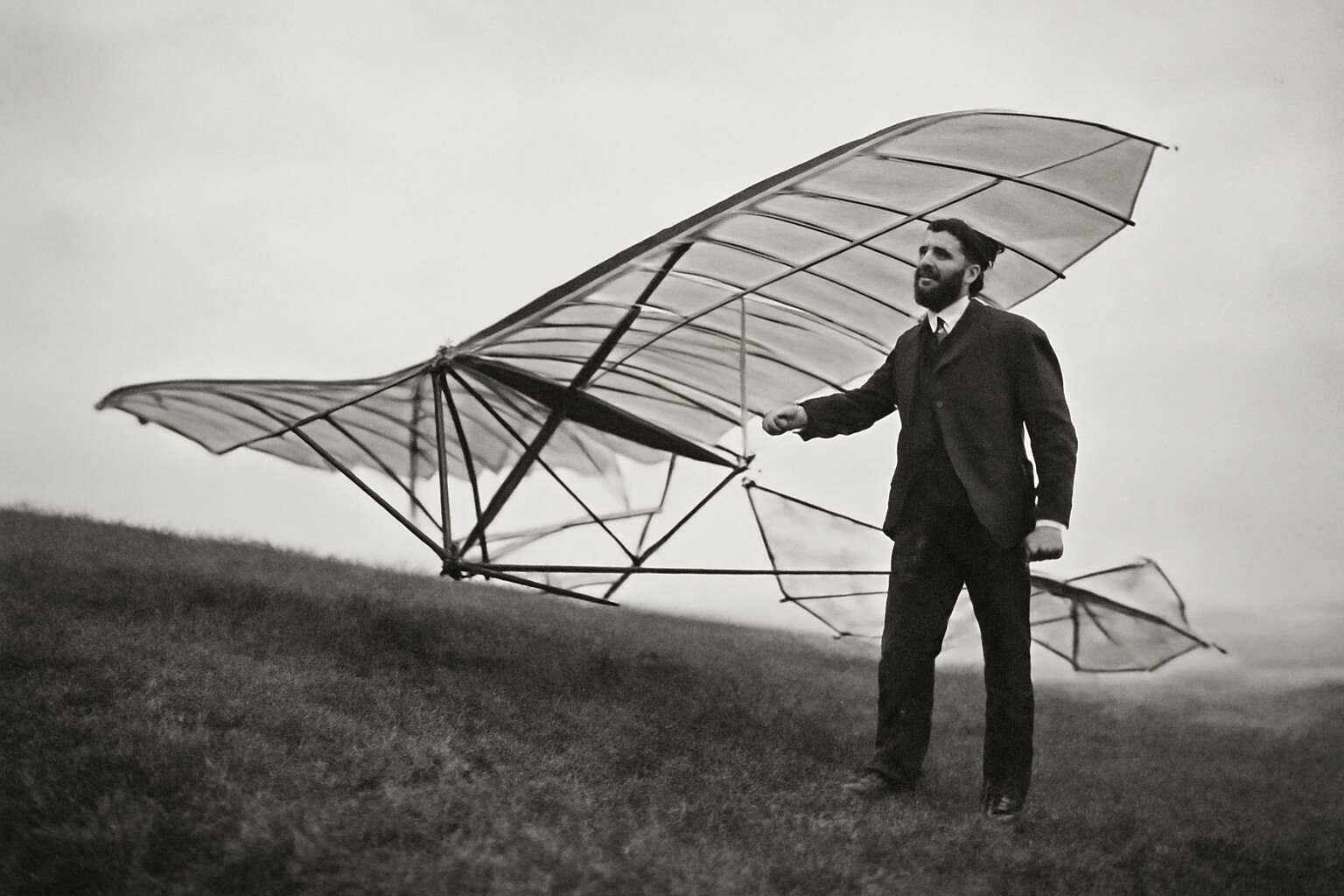
Otto Lilienthal turned gliding from a dare into data. He built on Cayley’s groundwork but pushed the idea with controlled flights and careful record-keeping. The question of when glider was invented finds a clear voice in Lilienthal’s lift-based experiments, on wind-swept hills and shared with the public through precise measurements. He treated the wing as a test instrument, refining camber, surface area, and balance. The result was a systematic ascent from curiosity to credible glide.
- Systematic, repeatable gliding tests on natural slopes
- Detailed measurements of lift, drag, and pitch stability
- Open sharing of data that influenced later designers
South Africa’s readers see Lilienthal as a bridge between theory and flight. His approach emphasizes the politics of knowledge—measured risk, transparent results, slow progress—less spectacle, more craft that anyone can study. The method is a reminder that progress is careful, not flashy. That’s a quiet revolution!
Pioneers of Early Flight and Gliders
George Cayley and the Concept of Lift
Lift isn’t a mysterious spell cast by a chalkboard wizard; it’s the wind teaching physics to wings. The question of when glider was invented has hovered over workshop benches as prototypes were tested, trimmed, and learned from every twitch of fabric and frame.
George Cayley, often billed as the Father of the Glider, treated wings not as decorative sails but as airfoils that must create lift. He separated lift from thrust, laid out the idea of a fixed structure with a tail for stability, and used lightweight materials to prove that weight distribution matters in flight—basically engineering with stubborn optimism.
Three takeaways from Cayley’s lift philosophy:
- Wings act as airfoils, creating lift
- Balance and tail surfaces govern stability
- Weight distribution and wing shape interact
These early ideas prefigured Lilienthal’s glide and the arc toward controlled flight, a lineage that still helps South African pilots ride gusty Cape winds.
Otto Lilienthal’s Soaring Gliders
Otto Lilienthal wasn’t just a footnote in aviation history; he was a one-man wind tunnel, tallying more than 2,000 flights in his soaring gliders. His work didn’t shout breakthroughs; it whispered through fabric, wood, and gravity until the air finally nodded. Pioneers like Lilienthal turned the dream of flight from curiosity into testable physics, showing that success rides on repetition, humility, and a good set of undercarriage cushions.
His gliders were practical tools, not museum pieces: they explored lift, stability, and control with patient, repeatable experiments. From wing curvature to balance, Lilienthal’s notebooks read like a pilot’s diary and a craftsman’s grocery list—test, measure, adjust, repeat. This is the era when glider was invented in earnest, and the wind became a willing co-conspirator.
- Iterative design rooted in real-world testing
- Attention to center of gravity and stability
- Documentation that fed later breakthroughs
Today, Lilienthal’s legacy reminds aviation that progress is built in the open, on damp mornings and stubbornly hopeful experiments.
Octave Chanute and Progress in Aviation Theory
A quiet thread runs through the late-19th century wind and wood: when glider was invented, how would air bow to human will? Octave Chanute, a Franco‑American engineer with a taste for shared knowledge, stitched a global dialogue of experiments, drawings, and stubborn failures. His Progress in Flying Machines (1894) gathered dozens of trials from North America to Europe, turning solitary effort into a coordinated quest.
His work asked not for lone brilliance but for communal progress: published plans, cross‑border exchanges, and a habit of documenting results so others could learn.
- Open sharing of designs and data
- Cross-continental collaboration among early aviators
- Systematic documentation that fed later breakthroughs
From those open pages grew a lattice shaping aviation theory as a field, not a flare. For South African readers, the tale resonates with a culture of openness and experimentation.
The Wright Brothers and Experimental Gliding
Hundreds of trials and clever experiments crowded the skies as the era of pilot development unfolded. The moment when glider was invented redirected curiosity into verifiable lift. The Wright Brothers treated gliding as a disciplined engineering puzzle, pairing wing-warping with careful data logging to turn air into controlled, repeatable motion.
Their approach fused experimentation with engineering discipline, a template for later gliding advances.
- Kitty Hawk trials refined control and balance
- Wing-warping and coordinated rudder-elevator inputs
- Data logging that split observation from guesswork
That fusion of method and daring still resonates in South Africa’s culture of open inquiry, where flight stories become shared knowledge.
Milestones in Glider Design and Technology
Wing Design and Stability Principles
Wind speaks in a tremor, and glider design answers with silhouettes that age like wine. The thread of when glider was invented winds through cantilever wings, refined airfoils, and the quiet arithmetic of weight and balance. Each milestone turned a fragile dream into a practical glide, a medium between breath and blade.
Milestones in wing design and stability:
- Transition to cantilever wings for clean lift
- Refined airfoil sections to improve lift-to-drag ratios
- Center of gravity and load distribution as a stability law
- Spoilers and dive brakes to tame descent
These yards of cloth and alloy narrate a history where balance and wing geometry become a language of trust. For South Africa’s skies, the lineage offers a grounded perspective on soaring, design discipline, and the quiet art of controlled descent.
Materials and Construction Advances
In the quiet arithmetic of air and ambition, the moment when glider was invented reshaped the horizon. Designers learned to listen to air and wood, turning fragility into a confident glide and setting a cadence for modern materials breakthroughs.
- Wood-and-fabric frames evolved to stronger spruce and aluminum spars, boosting stiffness per kilogram.
- Coated fabrics and early resins extended longevity while reducing maintenance and drag.
- Composite laminates and resin infusion unlocked longer wings and higher aspect ratios for better glide.
Today, South Africa’s glider communities carry that legacy into rugged airspace and polished hangars alike, balancing craft discipline with innovation. Lightweight, locally sourced materials and precise construction keep training safe and soaring accessible across the country’s vast skies.
Tow Systems and Launch Techniques
Gliders have taught us to listen to wind and intention. “Wings are built by patience,” a veteran pilot once said, and the numbers behind those words haunt the hangars. The question of when glider was invented still guides today’s tow systems and launch ideas across South Africa.
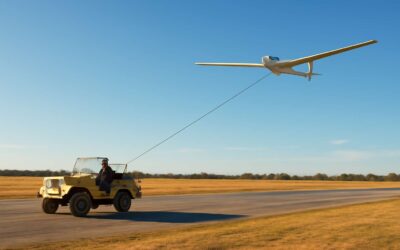
Milestones in tow systems arrived like whispered revolutions. Winch launches sprint from grass with a bare minimum of fuel, while aerotows pull gliders aloft behind steady aircraft. Rail launches offer precision on slopes, and bungee methods let small fields wake with lift.
- Winch-launch: grass-field efficiency
- Aerotow: aircraft-assisted ascent
- Rail/bungee: slope precision option
In South Africa, these evolutions translate into safer training and broader access; I’ve watched clubs from Karoo to coastal towns lift students with heritage and a fresh certainty.
Aerodynamic Validation and Flight Testing
“Patience built the wings,” a veteran pilot once said, and it still holds true for the moment we ask when glider was invented. The path from sketch to certified airframe hinges on aerodynamic validation and rigorous flight testing. Early wind-tunnel work and scaled models gave engineers a tangible sense of lift, drag, and stability before any hangar roll-out. These milestones ignite a quiet revolution—science replacing guesswork in design.
- Wind-tunnel validation of wing and tail geometries
- Full-scale flight testing with staged safety protocols
- In-flight instrumentation for lift, drag and stability data
- Iterative design cycles driven by empirical results
Today, South Africa’s clubs see these steps as safer training across Karoo plains and coastal air. The result is better access, more reliable aircraft, and smarter choices about what to fly. That historical arc continues to guide engineering and flight testing in a practical, non-jargon way.
The Evolution of Glider Use From Hobby to Sport and Competition
Gliding as a Sport: Early Clubs and Races
The skies shifted the moment when glider was invented, turning curiosity into competition. What began as a lone experiment soon blossomed into a shared theater of craft and breath. Pilots learned to read air currents, and the dream of flight became a sport with rules, records, and a stubborn, almost supernatural, intuition for wind.
Around the world, early clubs turned flights into friendly competitions. In South Africa, airfields in the Western Cape and Karoo hosted practice days, sparking local rivalries and camaraderie.
Three core aims shaped the sport’s early ethos: mastery of lift, measured risk, and shared knowledge. Pilots compared notes on thermals, glides, and safe launch procedures.
- Thermal hunting and lift scouting
- Turnpoint navigation and glide planning
- Safety-first scoring and record attempts
These early clubs and races stitched a culture where patience, data, and daring wove the fabric of competitive gliding into South Africa’s skies.
Global Organizations and Records
The wind is the real instructor in gliding, shaping pilots who learn to read lift as a language. The question, when glider was invented, marks a hinge point from solitary tinkering to a sport governed by rules, records, and shared craft. I’ve watched quiet practice grow into public competition.
- Global organizations and records — bodies like the FAI and national associations standardize safety and recognize world records.
- Major events and cross-border exchanges — regional meets feed into international championships, with South Africa contributing to the global roster.
- Training networks and certification — gliding clubs, schools, and launch systems connect pilots to experience and data.
In practice, the evolution from hobby to sport rests on shared data, careful scoring, and a culture of mentorship that travels from the Western Cape to the world’s skies and back again.
Classification Systems and Flight Rules
In South Africa, the air carries more voices than just wind. Glider clubs bloom with new pilots each season, and the horizon feels audibly closer. This arc begins with when glider was invented—a hinge from solitary tinkering to a shared discipline, a transition from hobby to sport and competition.
From quiet field launches to rules that govern races, the evolution is written in training, scoring, and mentorship.
- Competition classes and scoring protocols
- Preflight checks, right-of-way, and safe launch/retrieval rules
- Clubs as certification networks and cross-border exchanges
I have seen cross-border exchanges breathe life into the sport; South Africa sits at the heart of a generous network, where data, weather, and dream mingle as one.
Modern Gliding: Materials, Technologies, and Training
Gliding has moved from quiet fields to competitive skies in South Africa. “The moment the glider catches air, focus sharpens,” a veteran instructor says, and the sport feels inevitable. That question—when glider was invented—unfurls as a story of curiosity, craft, and shared skies.
From a hobby into a sport, the field embraced formal training, standardized scoring, and club networks that cross borders. Modern gliding centers blend safety with speed: lighter wings, precision controls, and data-driven coaching replace guesswork with measured skill.
Key lines of progress drive training and safety today, especially in South Africa’s glider clubs.
- Composite airframes for strength and lightness
- Electronic flight instruments for real-time data
- Winch and aerotow systems for safe, accessible launches
Around borders, mentoring and competitions push pilots to higher speeds and closer formations, turning backyard flights into measured sport.
0 Comments