
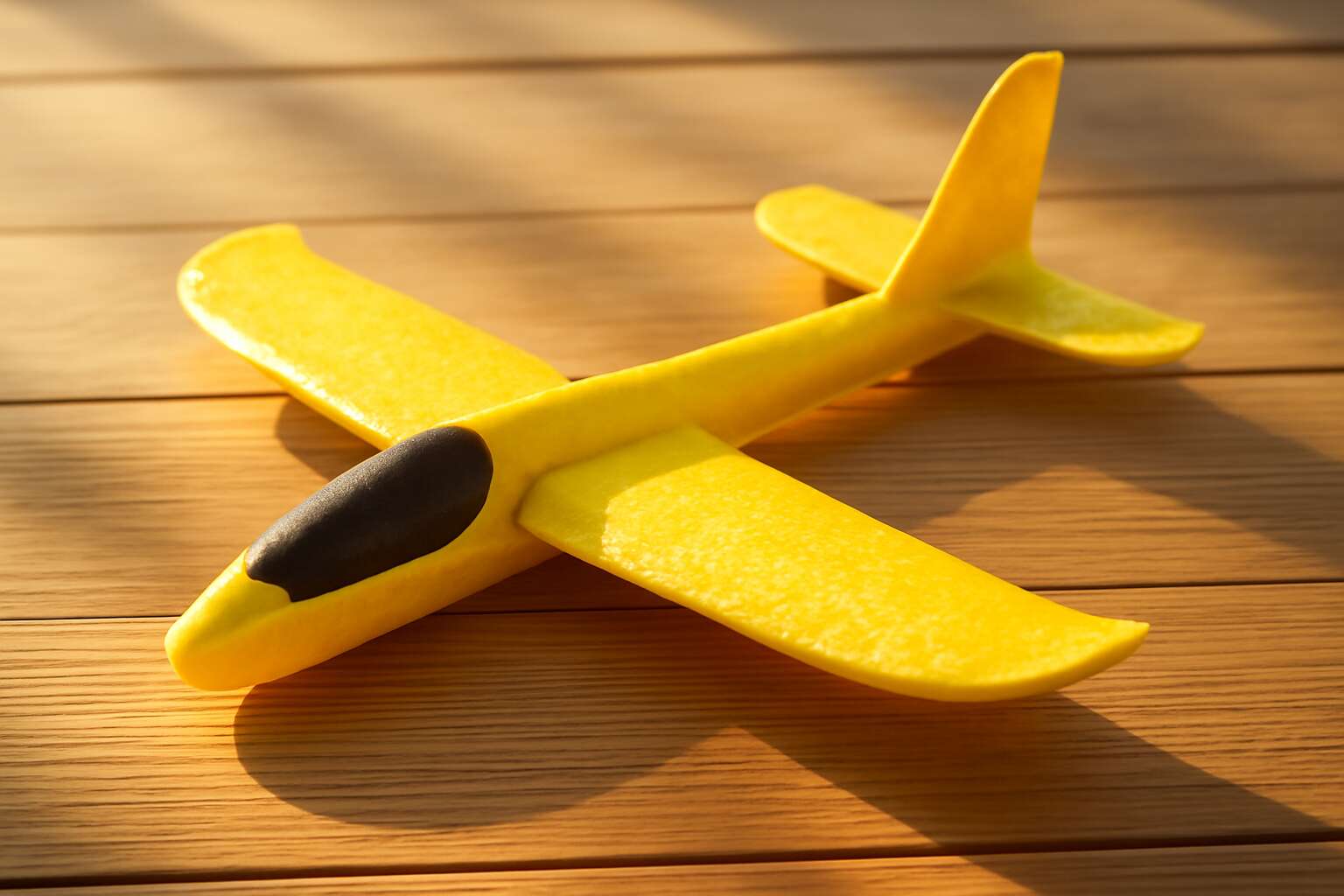
Overview of Lightweight Foam Gliders
What makes foam gliders appealing for hobbyists
“Crash, repair, repeat—the foam way,” quips a veteran pilot. Foam gliders are the bout-ready heroes of our hobby: light, cheap, and surprisingly sturdy. Polystyrene gliders, in particular, shrug off tumbles and breezes, turning a few minutes of carving into a graceful, forgiving flight that’s ideal for beginners and seasoned tinkerers alike.
We love them for the simplicity—low mass means steadier glides, and a quick tweak here and there invites real experimentation. For South Africa’s climate, polystyrene gliders handle sun, dust, and a gusty afternoon better than most, making outdoor sessions contentedly breezy instead of fraught with drama.
- Cost-effective to produce and repair
- Highly customizable shapes and fins
- Robust yet light, forgiving in gusts
Typical flight characteristics and performance goals
In South Africa’s sun-drenched afternoons, polystyrene gliders prove that lightness buys time and space. A few measured trims turn a gusty moment into a patient, graceful glide, and the session quickly reveals the aerodynamics of control for the curious pilot!
Typical flight characteristics favor stability over speed. Low wing loading yields gentle descents, and a balanced center of gravity keeps pitch changes slow, giving beginners confidence and veterans room to experiment.
Performance goals hinge on predictability and repairability:
- Stable, forgiving glide with predictable stall behavior
- Minimal sensitivity to minor gusts and crosswinds
- Accessible field repairs and rapid reassembly, with a parts kit ready
Historical development of foam-based gliders
Across South Africa’s sunlit afternoons, lightweight craft turn quiet breaths of air into small, patient skylines. A veteran flyer once whispered, “Lightness buys time,” and that counsel still travels between bench and breeze. The overview of lightweight foam gliders traces a lineage from early toy designs to the era of polystyrene gliders, whose molded foam unlocked affordable, forgiving ascent and glide. In this lineage, these soft-wing wonders invite curious hands to test balance, patience, and the art of subtle control.
Milestones along the arc of foam flight mark a cultural shift as South African clubs embraced lighter, cheaper flight.
- Late-20th-century mass production enabled by molded foam and recyclable plastics
- Wing dihedral and tail reinforcement improved stability without sacrificing lightness
- Today’s field-friendly kits emphasize easy repairs and rapid assembly for sessions across SA
Getting started: beginner-friendly project ideas
South Africa’s sunlit airfields are the proving grounds where beginners watch tiny foam gliders ride a patient breeze into a steady skyward arc. A veteran flyer once whispered, “Lightness buys time,” and those words still echo on workshop benches as curiosity takes flight, as if the wind itself lends a quiet, patient chorus.
Getting started with lightweight foam gliders means embracing polystyrene gliders as the ideal entry point. Lightweight foam keeps costs down and handling friendly, while simple geometry—neutral tails, shallow dihedral, and balanced center of gravity—lets newcomers feel the air without fighting the model. Designers in SA are turning to easy-to-assemble, field-friendly kits that celebrate forgiving ascent and gentle, forgiving glide.
- Try a basic flat-wing concept to gauge lift and balance in polystyrene gliders
- Compare wing shapes, from rectangular to elliptical, for glide feel
- Explore dihedral tweaks to see how stability shifts in wind
These ideas invite South African hobbyists to explore their own rhythm in the air.
Materials and Construction Fundamentals
Foam options for gliders: expanded polystyrene vs craft foam
“Less weight, more wonder”—a line that still rings in the SA workshop when builders speak of polystyrene gliders. The materials you select become air and partner, guiding how the wing kisses the wind and how the fuselage carries a story of lightness across the veld and coast.
For polystyrene gliders, two routes tempt the eye: expanded polystyrene and craft foam.
- Expanded polystyrene (EPS): cheap, easy to carve, sand, and seal; forgiving edges for gentle flights.
- Craft foam (EVA and friends): ultra-light, smooth finish, resists minor dents, but should be sealed to ward off moisture.
In a SA workshop, the choice shapes each glide—EPS for rugged reliability; craft foam for a crisp, polished finish, and for those quiet, confident curves that stay aloft longer.
Adhesives and bonding strategies for durable builds
Wind-wise builders know that construction is as much about chemistry as form. For polystyrene gliders, the fundamentals hinge on clean surfaces, compatible adhesives, and gentle, deliberate bonding. A single well-seated joint can carry a plane through rising thermals over the veld!
Key bonding strategies knit durability into the airframe:
- foam-safe adhesives selection to respect foam chemistry and prevent melting EPS/EVA surfaces.
- gentle surface preparation to improve contact without introducing stress.
- edge sealing and moisture/UV protection as a durability consideration.
With mindful grip and graceful materials handling, your gliders gain resilience that smiles back at the wind, and spectrums of flight open anew.
Cutting, shaping, and finishing techniques
Edges that gleam and curves that breathe—this is where craftsmanship meets aerodynamics. A veteran flyer quipped, “Polished surfaces kiss the wind better.” For polystyrene gliders, cutting, shaping, and finishing are the scaffolding of grace in the air. It’s not flash; it’s physics—clean joints and gentle transitions.
Cutting with a sharp blade and measuring by feel preserves foam integrity. The flow of shaping is key; avoid heat and solvents that melt EPS. Tools you might consider:
- sharp hobby knife
- foam-safe sandpaper
- finishing blocks
Finish with water-based sealers or acrylic varnishes designed for foam, applied in thin coats to maintain lightness and balance. With refinement, these polystyrene gliders take on the winds of the South African coast and veld, their surfaces smoother and more predictable, inviting flight without drama.
Reinforcement, durability, and weight management
Durability is the quiet spine of great flight—strong enough to weather a gust, light enough to soar. For polystyrene gliders, reinforcement and weight balance are the physics that keep a model honest in the wind. In South Africa’s coast and veld, a well-made wing carries stories as lift itself.
To frame durability without drama, three pillars suffice:
- Light, stiff spars that ride stress without swelling the foam
- Even wall thickness to prevent weak points
- Balanced joints that keep clean lines and predictable flex
In South Africa’s windward air, weight becomes a whisper and reinforcement a quiet chorus keeping lift steady and sink predictable. Field tests turn flight into dialogue with wind, and the glider answers with confident trim.
Aerodynamics, Stability, and Flight Performance
Key aerodynamic concepts: lift, drag, stability
In a South African breeze, aerodynamics shapes every graceful arc of polystyrene gliders. Lift whispers strength while drag tugs back, and the craft learns to trade weight for forward momentum in a quiet, deliberate ballet.
Stability is the steady compass—center of gravity, wing geometry, and a touch of dihedral chart a safe course through gusts and sudden shifts.
- Center of gravity positioning
- Dihedral for self-righting tendencies
Flight performance translates physics into poetry: glide efficiency, speed, control, and the tiny differences that separate a good flight from a great one.
Wing planforms and airfoil choices for stable glides
Across South Africa’s wind-swept mornings, well-tuned polystyrene gliders can log meters of glide in a mere 15 km/h breeze. The breeze becomes a collaborator, turning weight into momentum and air into poetry. In this quiet ballet, aerodynamics shapes every inch of glide and every mindful correction.
Wing planforms and airfoil choices anchor stability and efficiency. For stable glides, consider these common options:
- Rectangular planform: simple, predictable responses in gusts
- Tapered planform: smoother lift distribution and longer, steadier glides
- Gull or dihedral-wired variations: enhances self-righting in uneven winds
Airfoil selection, paired with careful center-of-gravity placement, guides flight performance. Flat-bottom foils deliver forgiving, stable lift; cambered foils increase lift for lighter winds. A slight forward CG helps pitch stability, while modest dihedral supports steady recovery after gusts.
Center of gravity, static and dynamic stability
Across South Africa’s dawn-lit skies, a light 15 km/h breeze becomes a theatre of glide for those who understand balance. The aerodynamics of lift and drag write graceful arcs, proving that precision is poetry and flight is destiny waiting to happen.
In calmer air, refined wing shapes reduce drag while preserving lift, letting gliders sail on longer, forgiving curves. The planform, surface finish, and airfoil whisper that efficiency is a dialogue between form and flow.
- Static stability: returns to equilibrium after gusts
- Dynamic stability: dampens oscillations over time
- Center of gravity: balance between pitch and recovery
Center of gravity acts as the quiet conductor of flight. A forward CG steadies pitch; dihedral invites gentle self-correction after gusts. For SA hobbyists, these ideas illuminate the beauty of polystyrene gliders in morning light.
Tail design and control surfaces for maneuverability
Across SA dawn skies, polystyrene gliders ride a 15 km/h breeze like pilots in training! Aerodynamics hinge on clean wing planforms, smart airfoils, and minimal drag. Subtle curvature and finish turn a light gust into lift.
Static stability nudges the model back after gusts; dynamic stability dampens oscillations. With a forward CG, dihedral, and a tuned tailplane, the flight becomes predictable and forgiving for beginners.
- CG position aids pitch stability
- Dihedral supports self-correcting roll
- Tailplane size tunes damping
Flight performance hinges on tail design and control surfaces for maneuverability. A balanced elevator and concise rudder deliver crisp response without overcorrecting. For these gliders, thoughtful tail geometry keeps weight down while sharpening control in calm SA mornings.
Surface finish and friction reduction for smoother flight
Aerodynamics for polystyrene gliders hinge on clean wing planforms, well-chosen airfoils, and minimal drag. On a SA dawn these gliders trace quiet arcs, where each surface facet adds lift with efficiency and a near-mirror finish turns a breeze into glide.
- Smooth, consistent surface finish to reduce friction in the boundary layer
- Uniform seams and joints to preserve clean airflow
- Light, protective coatings that maintain low drag
Stability guides the voyage: static stability nudges the model back after gusts, while dynamic stability damps oscillations. A thoughtful center of gravity, gentle dihedral, and a measured tailplane create a flight that feels predictable.
Flight performance rests on tail design and control surfaces. A balanced elevator and concise rudder deliver crisp response with minimal overcorrection. A smooth finish keeps friction low, letting polystyrene gliders glide with grace.
Testing, Tuning, and Safety Considerations
Planning and executing a build with testing in mind
In South Africa’s clubs, a modest 25% glide improvement after careful testing is a badge of pride for foam gliders. A veteran flyer once muttered, “flight is poetry braided with gravity,” and the truth lands softer when the wind cooperates.
Testing and tuning are rituals of accountability. Plan tests as conversations between wing shape, balance, and control surfaces, held in predictable conditions. The aim is repeatable observations, not luck, so each flight reveals more about the craft than chance ever could.
Safety considerations focus on space, people, and material limits. In practice this means choosing open venues, inspecting foam for cracks, and keeping bystanders safe while polystyrene gliders sweep the air with eerie grace.
- Environment and clearance
- Material integrity and handling
- Supervision and personal safety
Calibrating center of gravity and trimming for stable launch
“Flight is poetry braided with gravity,” a saying that echoes in the workshop as testers chase repeatable results. For polystyrene gliders, calibrating center of gravity and trimming for a stable launch is the difference between a wobble and a clean, quiet glide. The goal is repeatable observations, not luck, so each trial informs the next tweak.
- Center of gravity position and nose-tail balance
- Trim and incidence for stable launch
- Control surfaces alignment and travel range
Safety considerations focus on space, people, and material limits. In practice this means choosing open venues, inspecting foam for cracks, and keeping bystanders clear while foam gliders sweep the air with eerie grace.
Indoor vs outdoor test flights and adjustments
In testing polystyrene gliders, I chase a whisper of control—a flight that feels inevitable rather than luck-driven. Indoor spaces offer perfect silence and predictable drafts; outdoors, gusts become collaborators or adversaries, turning a simple throw into a tiny experiment with gravity.
Tuning means patient adjustments to trim and incidence, never force. I nudge the balance by subtle foam shaping and measured tests, listening for cues in pitch and recovery. These polystyrene gliders reward patience. Each pass narrows the mystery, edging toward a glide that is quiet and true.
Safety considerations shape the ritual, shaping how we observe and where we stand. The goal is harmony between craft, people, and space. A few principles:
- Preserve open sightlines and clear flight corridors
- Inspect foam for cracks, delamination, or soft spots
- Limit bystander proximity and provide a safe landing area
Troubleshooting common issues and tuning for range and duration
Testing polystyrene gliders unfolds like a quiet vigil where gravity speaks softly and predictability becomes art. Indoor spaces offer silent corridors for trim and balance; outdoors, every breeze becomes a collaborator or critic. The aim is a flight earned through patient observation, not luck.
Tuning is a dialogue with foam, a careful exchange of incidence and CG. Subtle reshapes and measured flights reveal the glide, guiding it toward range and duration that feel reliable rather than random.
- Nose or tail heaviness signals CG imbalance
- Delamination, cracks, or soft spots hamper efficiency
- Wing twist or asymmetric lift causes unstable recovery
Safety considerations shape the ritual: preserve open sightlines, inspect foam for cracks, limit bystander proximity, and provide a safe landing area. The field becomes a shared stage where polystyrene gliders glide with harmony between craft and space.

0 Comments