
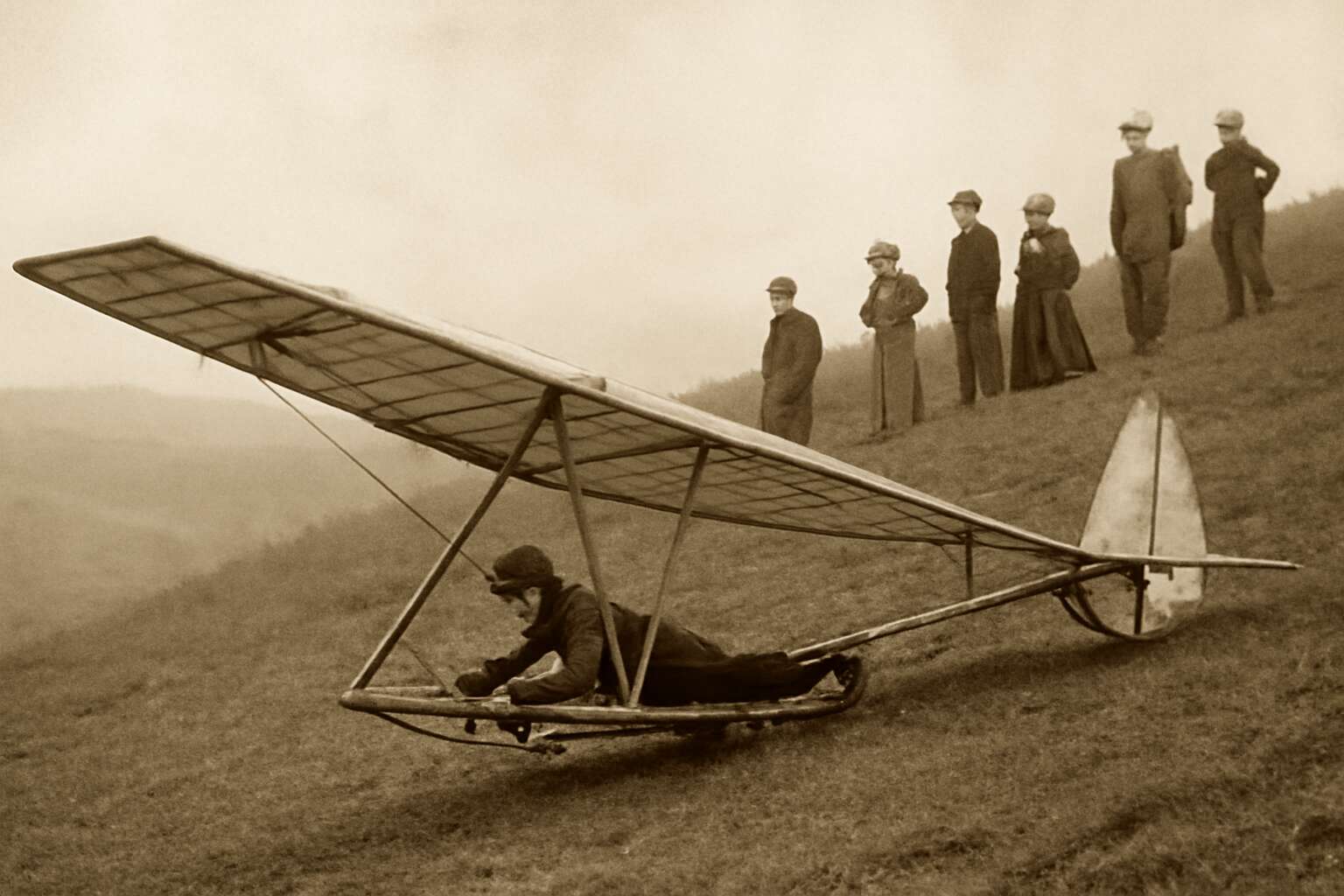
Origins and early aerial experiments of the glider plane
Ancient gliding concepts and early designs
Flight has a stubborn way of unfolding—centuries of tinkering produced more than 1,000 glider experiments that teased the sky! The origins of the glider plane lie at the crossroads of curiosity and craft, where lift and balance took shape in the minds of dreamers across continents.
Ancient gliding concepts and early designs set the stage: in China and the Middle East, kites and simple gliders teased the air; Leonardo da Vinci sketched wind-riders long before powered flight. The pivotal shift comes with Sir George Cayley, whose 1804 study separated lift from propulsion and introduced the fixed-wing idea.
- Leonardo da Vinci’s aerial sketches
- Sir George Cayley’s fixed-wing concept
- Otto Lilienthal’s gliding experiments
The question of who invented glider plane has many answers, but Cayley’s work is frequently cited as the spark that launched modern aviation.
Key milestones in pre-modern aviation
Flight’s timeline reads like a stubborn long-shot: across centuries, more than 1,000 glider experiments tried to tease the air. From the kite-sprung hills of Asia to balcony experiments in Europe, curiosity stitched lift and balance into craft. The origins of the glider plane sit at the crossroads of dare and design, gathering notes on stability, control, and the bittersweet joy of a breeze on your face.
Pre-modern aviation milestones blur into one fascinating arc: dreamers shifted from propulsion to glide, testing slopes and the geometry of wings with the patience of a bored cat watching a bird. So, who invented glider plane? The best answer honors a chorus of tinkers and thinkers who built the ladder toward powered flight.
Sir George Cayley looms as the pivotal spark, while Otto Lilienthal pressed the art into controlled, graceful hops. In South Africa and beyond, these early glider experiments still spark modern design chatter and a touch of aviation bravado.
Aircraft experiments that set the stage for gliders
Flight didn’t arrive with a single thunderclap; it crept up like a caffeine-fueled staircase of experiments. By the 19th century, circuits of scribbles and makeshift glides showed lift is earned, not borrowed. So, who invented glider plane? The answer isn’t a lone genius but a chorus of tinkerers shaping a stubborn breeze into craft.
Across cultures, early minds experimented with wings and balance before engines took the stage. Leonardo da Vinci’s sketches hinted at how humans might flirt with the air, and Abbas Ibn Firnas’s gliding attempts nudged the conversation toward controlled motion, not reckless leaps.
- Wing geometry and camber
- Center of gravity and stability
- Launch methods turning slopes into experiments
These threads connect the ancient sketches to the modern glider craft, a lineage South Africa quietly admires with a wink.
Influence of ballooning and kite dynamics on gliding
Glider origins read like a wind-swept diary rather than a single invention. In the 19th century, hundreds of experiments stitched lift into the air, proving ascent is earned through geometry and patient trial. The question—who invented glider plane—rings through history, but the answer is a chorus of tinkers, not a lone genius.
Ballooning offered the first hints that air could lift a weight without flame. Balloons taught buoyancy and altitude control; kites demonstrated how shape and tethering influence stability. Early designers studied wing camber and the dance of wind along a frame, turning gusts into guided motion!
- Ballooning buoyancy
- Kite-driven stability
- Slope-launch testing
South African skies carry their own whisper of gliding heritage; the lineage is shared, not proprietary. From Da Vinci to Ibn Firnas to local aviation clubs, the pursuit keeps circling back to balance, control, and the stubborn charm of lift.
Pioneers who shaped glider plane development
Sir George Cayley and the first true glider
Two centuries ago, a measured hand sketched wings and taught air to listen. Sir George Cayley became the quiet architect behind the first true glider, a craft built not on whim but on balance and law. The lingering question—who invented glider plane—narrows to a lineage of insight that crosses oceans and ages, even reaching readers in South Africa with its own wind-swept skies.
From lifting surfaces to the art of stability, Cayley’s work separated lift from propulsion, trimmed drag, and introduced a fixed wing with a tail for control. His experiments foreshadowed modern flight, turning sketches into machines and courage into coordinates. The first true glider opened doors for every tangent of human ascent.
- Defined lift, weight, thrust, and drag as four essential forces
- Introduced a fixed-wing design with a stabilizing tail
- Conducted the era’s most convincing manned glider trials
Otto Lilienthal: the flying machine that popularized gliding
More than 2,000 glides mapped the sky for Otto Lilienthal, a figure whose work feels like poetry written in wind. He became the flying machine that popularized gliding, turning trials into a disciplined craft rather than a dare. So who invented glider plane? Lilienthal answered with a life spent chasing balance and buoyancy.
His hilltop flights near Berlin tested lift, stall, and control with patient, methodical precision. Through Birdflight as the Basis of Aviation, he shared lessons that would ripple into every later flight, from the earliest experiments to the ambitious plans of the 20th century.
- Proved sustained, controllable gliding through hundreds of trials
- Introduced movable control surfaces to steer and stabilize flight
- Published accessible observations that inspired future aviation pioneers
Across South Africa, his dedication to disciplined curiosity still informs how we dream, measure, and move toward the sky.
Ludwig Prandtl and aerodynamic lift theory
Across the turn of the century, flight began to feel like engineering rather than whim. So who invented glider plane? Ludwig Prandtl answered with a theory that turned air into a measurable partner—the boundary between hope and application, where science meets wind.
Prandtl’s work laid the groundwork for how gliders fly:
- Boundary layer concept clarifying where viscous drag begins
- Lifting-line theory offering practical lift estimates for slender wings
- Guidance for airfoil shapes and stability critical to efficient gliders
In South Africa, aero clubs and wind tunnels translated these insights into field tests, marrying rigorous measurement with bold experimentation.
Octave Chanute and the exchange of ideas shaping glider plane development
Octave Chanute didn’t take a single leap—he braided a web. Across oceans and in South Africa’s aero clubs, hundreds of glide attempts had turned the dream of flight into a shared project. His tireless exchanges stitched North American grit to European curiosity, turning isolated experiments into a living map of gliding progress.
- Progress in Flying Machines connected engineers across the Atlantic
- Open letters, reports, and demonstrations accelerated practical testing and cross-pollination
The result was a communal engine behind early glider design, a force that nudged the question of who invented glider plane toward collaboration rather than a lone inventor.
Other early contributors and collaborative progress
The question who invented glider plane isn’t a single spark; it’s a chorus of experiments across continents. Beyond Cayley and Lilienthal, a parade of pioneers kept lifting the idea higher through trial and error and shared notes. This is where the South African aero clubs and early transatlantic letters fed a practical, evolving map of flight.
Two often overlooked contributors helped push gliding from curiosity to craft:
- Percy Pilcher — built agile British gliders and pressed for practical lift and controllable flight.
- John J. Montgomery — demonstrated gliding in California, documenting steady approaches that informed later designs.
These efforts stitched together local experiments with global ambitions, turning gliding into a collaborative project rather than a solitary dream.
Technological milestones in glider aviation and glider plane design
First successful modern gliders and launch methods
Glider pioneers have chipped away at the air’s stubbornness, turning speculation into a 60:1 dreamscape for many pilots. So, who invented glider plane? The answer is not a solitary spark but a chorus of curious minds, testing wings, watching thermals, and refining every reset of fate in flight.
Technological milestones emerged with weight-saving materials, longer, cantilever wings, and refined airfoils that squeeze more lift from less drag. In South Africa, clubs harness sunlit thermals. First modern gliders benefited from better joints, added wheel/tail gear for easier handling, and safer launching systems—each step nudging performance higher and the craft closer to the perfection of effortless glide.
Launch methods evolved alongside airframes:
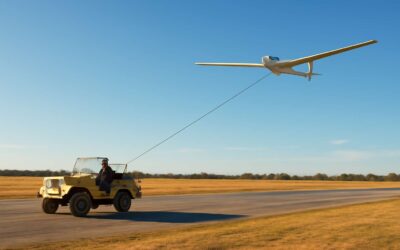
- Aerotow: tow-plane assisted ascent
- Winch launch: ground-based rope impulse
- Bungee launch: hill-based spring start
In truth, who invented glider plane is a lineage of craft, not a solitary name, and the story keeps gliding forward with every new design and ascent.
Winch and aerotow techniques
Technological milestones reshaped the gliding dream across South Africa, with lighter materials, longer cantilever wings, and refined airfoils that coax more lift from less drag. So, who invented glider plane? The answer isn’t a single spark but a chorus of curious minds bending wind into flight, a lineage rooted in trial, error, and fearless experimentation.
Two launch methods anchor modern glider design:
- Winch launch: ground-based rope impulse
- Aerotow: tow-plane assisted ascent
These techniques dictated how airframes were shaped for safety and control, turning the glider plane into a precise instrument of silent, seasonal transition.
Record-setting glider flights and performance benchmarks
Glider technology has rewritten the sky, with record-setting glider flights and performance benchmarks showing a long arc of improvement. Modern sailplanes routinely achieve glide ratios around 60:1, a leap from early craft that managed little more than a gentle fall. Lighter materials, longer cantilever wings, and refined airfoils coax more lift from less drag, turning the dream of silent flight into a reliable tool for sport and science.
So who invented glider plane? It’s not a single spark but a chorus of curious minds bending wind into flight. In South Africa, local clubs mirror the global pace, balancing safety and control as airframes evolve to exploit higher efficiency and predictable handling.
Record-setting progress is a tapestry of small, precise gains:
- Composite laminates reduced weight while increasing stiffness.
- Cantilever wings lengthened for better efficiency.
- Refined airfoils boosted lift-to-drag ratios across speeds.
Materials and design breakthroughs in airframes
Under South African skies, ascent feels like a nocturne written in wind. The glider’s lineage stretches beyond engines, yet the finest flight today is a study in patient craft. Modern sailplanes routinely achieve glide ratios near 60:1, a statistic that glitters in the workshop and dares the sun to listen.
The question: who invented glider plane? The answer is a chorus—no single spark, but a lineage etched in materials and form. Lightweight carbon laminates and glass-fiber skins confer quiet strength; cantilever wings shed drag with effortless grace; refined airfoils coax lift across a spectrum of speeds.
- Composite laminates cut weight, boost stiffness
- Cantilever wings reduce drag and improve rigidity
- Airfoil refinements boost lift-to-drag balance
In this cathedral of flight, milestones whisper a shared dream for sport and science, and I hear the hangar breathe.
Instrumentation and flight testing advances
In South Africa’s wide-open airstrips, soaring isn’t just poetry—it’s data. Modern gliders routinely squeeze glide ratios near 60:1, and pilots celebrate with a smile, not a sigh. Behind that quiet efficiency lie steady advances in instrumentation and flight-testing that turn brave experimentation into repeatable performance.
Key instrumentation milestones include:
- Miniature data loggers and sensor packs record attitudes, airspeed, and G-loads
- Wind-tunnel testing paired with CFD refining airfoils and cantilever wings
- In-flight instrumentation such as variometers, GPS glide-path tracking, and telemetry
The question who invented glider plane yields a chorus of pioneers rather than a single inventor. Progress arrives through better materials, aerodynamic insight, and rigorous flight-testing routines—the quiet revolution that made today’s soarers possible.
Impact and legacy of glider plane development
Gliders in sport, research, and education
The question of who invented glider plane resonates as a chorus: Cayley planted the seed, Lilienthal gave it lift, and a lineage of curious minds carried it forward. In South Africa, glider clubs tell of quiet ascents and sunlit landings, where air teaches and imagination soars.
Its impact spans sport, research, and education. In SA, gliding informs youth outreach, university projects, and steady cross-country flying that tests wind, skill, and patience.
- Sport: soaring, cross-country work, and club culture that prizes precision.
- Research: wind-tunnel insights and flight-physics data guiding simulations.
- Education: training flights and outreach that grow aerospace literacy.
The glider’s legacy keeps teaching endurance and wonder to new pilots beneath Africa’s skies.
Influence on powered aircraft design and flight theory
A single, quiet glider flight rewrote the air’s unwritten rules. Across decades, the glider’s lift and balance shaped modern flight—and the question of who invented glider plane still echoes in South Africa’s museums and clubs. The answer isn’t a footnote but a lineage of curiosity that learned to listen to the wind, and that listening is still the pilot’s most trusted instructor.
Gliders taught engineers to model flight without an engine: lift curves, stability, and the timing of inputs. Those insights seeped into powered aircraft design and flight theory, turning intuition into repeatable physics. In our SA skies, that legacy informs university projects, youth outreach, and the patient, cross-country disciplines that push pilots to outlast the gusts.
- Foundations of lift and aerodynamic efficiency
- Stability, control, and flight-testing methodologies
- Cross-disciplinary learning that informs design and education
The glider’s lineage remains a quiet tutor, teaching endurance and wonder to new pilots beneath Africa’s skies.
Preservation of historic gliders and museums
Gliding’s quiet impact is etched in flight history. Record glider flights can exceed 10 hours in ideal thermals, a reminder that unpowered wings can outstay many engines. The question who invented glider plane becomes a lineage rather than a single founder—a pursuit that taught pilots to listen to wind and to trust stability. In South Africa, that legacy informs preserved airfields, school programs, and museum displays that celebrate endurance over power.
- Preservation of historic gliders and museums
- Public collections and restoration workshops
- Educational programs in universities and clubs
These preservation efforts keep the glider’s influence tangible for SA clubs, universities, and the wider public.
While the debate over who invented glider plane may persist, the answer is a continuum. In our country, that continuum lives in museum halls, airshows, and the patient art of cross-country flight.
Contemporary gliding innovations and future outlook
Gliding leaves a quiet, lasting mark on South Africa’s skies. The question who invented glider plane is a thread through history, not a single name—an evolving art of listening to wind, balancing on thin air, and valuing endurance over power.
Contemporary gliding innovations in SA fuse composite wings, lighter airframes, and smarter flight data. Cross-country pilots chase thermals with precise routing, while clubs emphasize safety and community. The future promises more efficient sailplanes, inclusive programs, and stronger links between schools, hangars, and open airfields!
Already in place, heritage programs and education partnerships sustain the glide’s spirit.
- Education outreach
- Museum collaborations
- University research
0 Comments