
Wing geometry and performance fundamentals
Understanding aspect ratio and wing slenderness
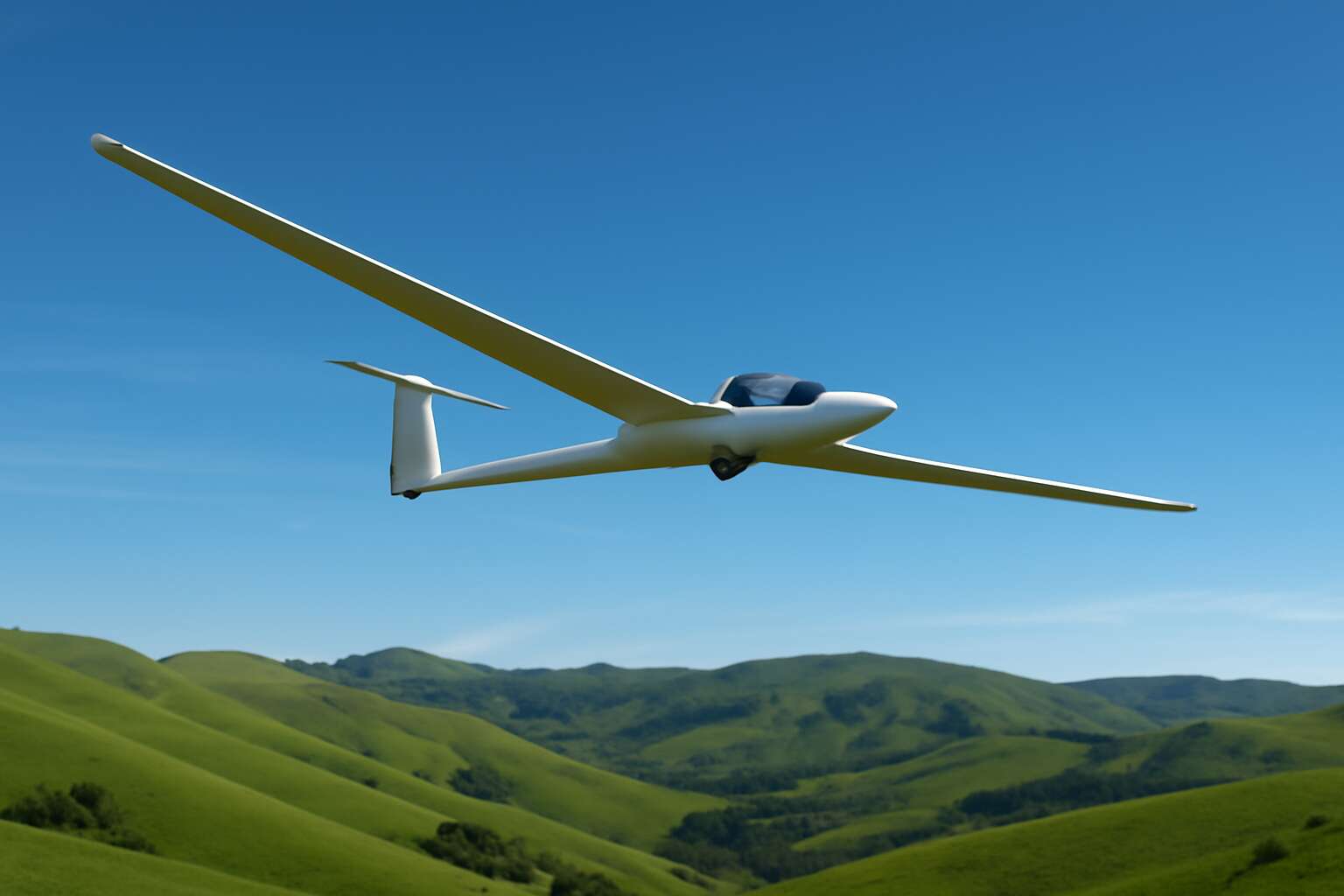
Glider pilots know the game is won in the air, not on the tarmac. The best planes somehow stay aloft while others sulk on the runway. why are glider wings long and thin? The answer is geometry: long, slender wings slice through air with less resistance and more steady lift, especially in South Africa’s buoyant thermals. Modern designs push lift-to-drag ratios north of 50:1.
Understanding aspect ratio is a key to wing performance. Aspect ratio is the wingspan squared divided by the wing area; high AR means less induced drag at a given lift, so the glide ratio climbs. Slender wings also help delay energy-sapping tip vortices.
- Lower induced drag at cruise lift
- Higher glide efficiency (better L/D)
- Predictable stall onset along the root
In South Africa’s varied skies, these traits translate into longer flights with gentler handling and a satisfying sense of aerodynamic swagger.
Effect of wing taper and span on aerodynamic efficiency
In the wide South African skies, wing geometry shapes every glide, whispering with the wind as soon as the barograph dips. The effect of wing taper and span on aerodynamic efficiency is subtle but decisive; a gradual narrowing toward the tip and a carefully tuned span work together to limit energy loss and keep lift steady as altitude changes. This ties back to the perennial question: why are glider wings long and thin? The answer lies in how shape governs flow and vortices along the wing’s edge.
- Wing taper lowers the strength of tip vortices, cutting induced drag at cruise lift
- Longer span spreads lift across more area, improving L/D without a heavy penalty in structure
- Graceful taper helps predictable stall behavior and smoother control response
In practice, South Africa’s thermals reward wings that balance reach with elegance, turning air into a canvas of extended, confident glides.
Historical and modern design drivers for long, thin wings
Wings engineered for glide balance wear the patience of a craftsman. From the wooden beginnings to carbon-laminated moderns, long, slender spans became a beacon of efficiency, turning wind into distance. The shimmer of air along a thin wing carries lift with minimal drag.
Historically, designers pursued large aspect ratios and clean aerodynamics; modern pioneers pair that goal with advanced materials and precise manufacturing. The enduring form favors laminar flow and forgiving stall behavior, letting pilots ride rising thermals with steadiness and confidence.
In South Africa’s bright skies, this design philosophy yields graceful, extended glides, a living answer to the question why are glider wings long and thin—an elegant compromise between reach and control.
Aerodynamics behind long, thin wings
Lift generation and induced drag with high aspect ratio
Across the veld and open skies, gliders demonstrate stubborn efficiency that motor planes envy. Modern designs routinely deliver glide ratios around 60:1, letting a craft ride thermals for hours! why are glider wings long and thin—the answer lies in pure aerodynamics. Long, slender wings spread lift over a wider span while air slips past with less friction, turning rising currents into sustained, quiet flight.
- Lift is generated more efficiently when the lift spans a longer wing.
- Induced drag falls as the wing’s span grows, especially at glide speeds.
- Wingtip vortices weaken, boosting the glide ratio without extra power.
South Africa’s diverse skies—from coastal breezes to inland thermals—reward designs tuned for efficiency rather than brute power. The result is longer time aloft, steadier performance, and a glide that makes the most of every air current.
Airfoil selection and laminar flow considerations
The aerodynamics behind long, thin wings is a study in patience and precision. In South Africa’s shifting air, a slender span sustains lift with less drag as thermals rise. The question why are glider wings long and thin has crisp logic: longer wings spread lift, while air slips by with minimal friction for steady, quiet flight.
Airfoil selection and laminar flow considerations sharpen efficiency. A profile that nurtures stable laminar flow reduces drag at glide speeds. For glide-focused performance, engineers favor profiles with gentle camber and clean surfaces.
- Laminar flow preserves energy over the span.
- Low camber keeps lift predictable at speed.
- Smooth finishes deter early transition.
These choices reveal a broader truth: performance thrives when the air is invited to cooperate, not bullied. In SA skies, the art of the wing becomes a moral balance of efficiency, resilience, and ascent!
Reynolds number effects on wing performance
Gliders routinely savor glide ratios around 50:1, and longer, thinner wings push that boundary even farther. Reynolds number conducts a patient score, weighing inertial forces against viscosity and guiding the boundary layer between laminar calm and turbulent stir. For glider wings long and slender, this arithmetic favors a smooth flow along the span, preserving energy and lift. This unfolds as the timeless question: why are glider wings long and thin.
Reynolds-number effects on wing performance show up as a trio of truths:
- Laminar flow tends to stay longer on a slender span, cutting skin friction
- Longer span distributes lift with reduced induced drag
- Surface quality and clean finishes push the boundary-layer transition back, preserving efficiency
Across South Africa’s skies, these facts read like a compass for ascent!
Stability and control characteristics of slender wings
Gliders glide with patient elegance, where long, thin wings are more a physics bargain than a fashion statement. With glide ratios around 50:1, the aerodynamics behind long, thin wings favor a smooth boundary layer and efficient lift—the kind of quiet genius that makes wind look easy. The perennial question: why are glider wings long and thin.
In practice, the slender profile supports stability-friendly traits: spanwise lift distribution and a calmer boundary layer keep the flow attached longer, easing pitch and roll quirks in marginal air over South Africa’s skies.
- Spanwise lift distribution smooths energy decay, cutting abrupt pitching moments.
- Longer span promotes gentler roll and yaw responses, especially in light winds.
- Careful twist and surface finish keep boundary layers attached, preserving efficiency.
Across South Africa’s thermals, that blend of flow and geometry translates into a reassuring sense of stability and control.
Performance implications for glider pilots
Glide ratio, sink rate, and altitude preservation
South Africa’s skies reward patient pilots with extraordinary settings for gliding; data show many high-performance flights posting glide ratios over 40:1. The logic is simple: longer, thinner wings slice through the air with less energy leakage, squeezing more distance from each meter of altitude. This isn’t whimsy; it’s a deliberate balance of lift, drag, and the stubborn sky that refuses to give up its lift readily. The question why are glider wings long and thin becomes a practical answer: efficiency buys altitude.
Key performance levers for pilots are glide ratio, sink rate, and altitude preservation.
- Glide ratio defines distance flown per unit of altitude
- Sink rate dictates how long you hang in rising or sinking air
- Altitude preservation extends your operational envelope
Cruise efficiency across different speeds and flight regimes
Across South Africa’s open skies, glider pilots discover a quiet truth: efficiency buys altitude. In many days the fleet’s best flights post glide ratios over 40:1, a testament to wings designed for slender, long lines. The question why are glider wings long and thin becomes clear. The answer sits in the air itself—less energy leaks away with every beat of the wing, more distance carved from the sky.
- Low-speed thermalling and steady lift benefit from slender wings, preserving energy in rising air.
- Mid-range cruise balances forward speed with lift for longer, smoother glides between thermals.
- High-speed transit keeps air flowing efficiently, trading some margin for stability and handling.
In South Africa, these performance levers aren’t abstract theory; they shape the quiet drama of flight over veld and escarpments, turning patient waits into vistas and turning wings into quiet poets of the wide sky.
Handling characteristics at high aspect ratios and during thermalling
Performance for glider pilots hinges on how a long, slender wing negotiates the sky’s currents. In thermals, high aspect ratios grant a gentle sink and steady momentum, but demand a deft touch. The perennial question—why are glider wings long and thin—finds its answer in the air itself.
Handling at high aspect ratios during thermalling favors finesse over brute force.
- Delicate roll responsiveness; steady climbs.
- Gust sensitivity; trim and anticipation matter.
- Stable yaw; keeps the course true.
South African skies frame these traits as pilots weave between veld and escarpments, turning patience into performance.
Engineering challenges and manufacturing
Structural weight and material choices for thin wings
In the quiet calculus of soaring, a glider’s slender profile is no accident. The question—why are glider wings long and thin—appears on every workshop whiteboard, tethering aerodynamics to weight, stiffness, and the chill of high-altitude air. Efficiency through slenderness demands precision engineering.
Engineering challenges loom when every gram matters and the wing must endure thermo-mechanical loads. Thin wings push structural weight and corrosion resistance to the fore; material choices must deliver stiffness without sacrificing fatigue life or manufacturability, especially in South Africa’s varied production environments.
- Carbon fiber composites with advanced epoxy matrices
- Glass fiber composites for cost-effective stiffness
- Lightweight aluminum alloys for resilient hybrids
Manufacturing tolerances, curing cycles, and joint details must be managed to keep slender-wing benefits intact.
Ultimately, the material system is a negotiation between performance, cost, and local manufacturing capability—elements close to South Africa’s aeronautical sector. The outcome is a wing that remains light and predictable through diverse flight regimes.
Manufacturing tolerances and quality control of slender profiles
Engineering challenges loom when every gram matters. Slender wings endure thermo-mechanical cycles, humidity, and fatigue, demanding predictive accuracy in South Africa’s varied workshops. The question why are glider wings long and thin is answered by precision manufacturing and unwavering quality assurance that keeps the span light and the lift predictable!
- Dimensional limits for straightness and twist
- Uniform thickness and camber along the span
- Surface integrity to avoid micro-flaws
- Joint alignment and fastener fit
- Process stability through heat/lamination cycles
Quality checks rely on non-destructive testing, process traceability, and statistical controls that catch deviations before they become compromise. In South Africa, a network of skilled suppliers and in-house inspectors keeps slender profiles consistent through manufacture and handling, letting the magic of long, thin wings stay quietly reliable.
Durability, fatigue, and damage tolerance
Glider wings, engineered for sea-green skies, chase a lift-to-drag ratio often flirting with 60:1. The question why are glider wings long and thin echoes through every workshop. These slender profiles endure thermo-mechanical cycles, humidity, and fatigue; durability hinges on predictive manufacturing and damage-tolerant design.
- Crack-growth control in ultra-thin laminates
- Damage tolerance and residual strength after minor impacts
- Robust non-destructive testing and process traceability
In South Africa, skilled shops and QA networks keep the lamination consistent, letting slender wings stay quietly reliable.
Cost versus performance trade-offs in wing design
Within the workshop, the quiet question why are glider wings long and thin shapes the day. Lift-to-drag ratios around 60:1 are chased, not promised, shaping every resin choice and every reinforcement. Engineering here becomes a discipline of restraint, where every material choice weighs performance against cost.
- Material and tooling costs push designers toward high-quality composites rather than cheap alternatives.
- Tighter tolerances and quality control add upfront capital but reduce field risk.
- Automation versus artisan layups defines the break-even point for production runs.
Across South Africa, skilled shops and QA networks wrestle with the same arithmetic—achieving predictable performance while keeping costs in check—so slender wings stay quietly reliable rather than financially brittle.
Applications, trends, and future directions
Examples from record-setting gliders and competition designs
Across South Africa and beyond, high-performance gliders win on wings that stay long and thin. The long, slender shape minimizes induced drag as lift is produced, delivering longer glides with less energy spent. The phrase ‘why are glider wings long and thin’ drives ongoing design work, pushing engineers to chase cleaner aerodynamics, smoother laminar flow, and lighter, stiffer materials. These ideas support applications from cross-country racing to training fleets, guiding choices in wing geometry and construction.
Examples from record-setting gliders and competition designs illustrate trends.
- Extended aspect ratios push wings toward practical material limits
- Refined taper and tip shapes cut vortex shedding
- Surface cleanliness and robust controls improve thermalling stability
Future directions lean on lighter composites, smoother manufacturing, and wing-tip refinements to preserve lift and minimize drag at altitude. The ongoing push for efficiency in South Africa’s skies keeps designers chasing practical, field-ready innovations.
Advances in composite materials and manufacturing techniques
In South Africa, practical glider design fuses field reality with clean aerodynamics. When you ask why are glider wings long and thin, the answer is simple: long spans cut induced drag while a light, stiff structure keeps weight in check. The result is longer glides, steadier thermals, and a forgiving handling envelope pilots can count on in real-world cross-country flights. I’ve seen this firsthand in SA test days—performance with a smile!
Key manufacturing advances underwrite these gains. Consider:
- Hybrid carbon-aramid spars for strength with lightness
- Automated layup and resin infusion for cleaner surfaces and tighter tolerances
- Low-friction coatings and precision tooling to reduce parasitic drag
Looking ahead, the trend is toward even lighter composites, smoother manufacturing, and wing-tip refinements that hold lift at altitude while damping tip vortices. In South Africa, this blend of performance and practicality keeps training fleets nimble and competition gliders sharply responsive to varied weather.
Innovations in wing shape, control surfaces, and passive stability
South Africa’s soaring scene proves a nimble wing can redraw the map. In SA test days, pilots chalk up longer cross-country legs with long, thin wings. “why are glider wings long and thin?” Because long spans cut induced drag and a light, stiff structure keeps weight in check, letting thermals carry you farther and with less wobble.
Applications in training fleets and competition gliders showcase the flow: efficiency, reliability, and forgiving handling that keeps pilots smiling from takeoff to touchdown.
- Wing shape refinements to tame tip vortices and improve lift distribution
- Control surfaces calibrated for crisp, predictable responses
- Passive stability features that ease workload in variable thermals
Looking ahead, trends point to lighter materials, tighter manufacturing tolerances, and wing-tip refinements that preserve lift at altitude while damping energetic vortices. In South Africa, this blend of practical training relevance and top-tier performance keeps fleets nimble and pilots adaptable to changing weather.
Environmental considerations and sustainability goals in gliding
In South Africa’s wind-sculpted skies, 60% more cross-country efficiency can come from slender wings. That question—why are glider wings long and thin—finds its answer in lift and drag: a long span reduces induced drag, while a light, stiff structure keeps weight in check so thermals lift you farther with less wobble. Applications in training fleets and competition gliders showcase efficiency and forgiving handling from takeoff to touchdown.
Trends point to lighter materials, refined wing tips that tame vortices, and lift that stays strong at altitude. Environmental considerations move from footnote to front seat: shorter tow runs, smarter airspace planning, and sustainable hangar practices. Clubs increasingly embrace solar-powered facilities and material recycling to shrink the glider’s footprint.
- Reduced tow distances and electric tow options
- Solar-powered ground operations
- End-of-life recycling of composites



0 Comments