
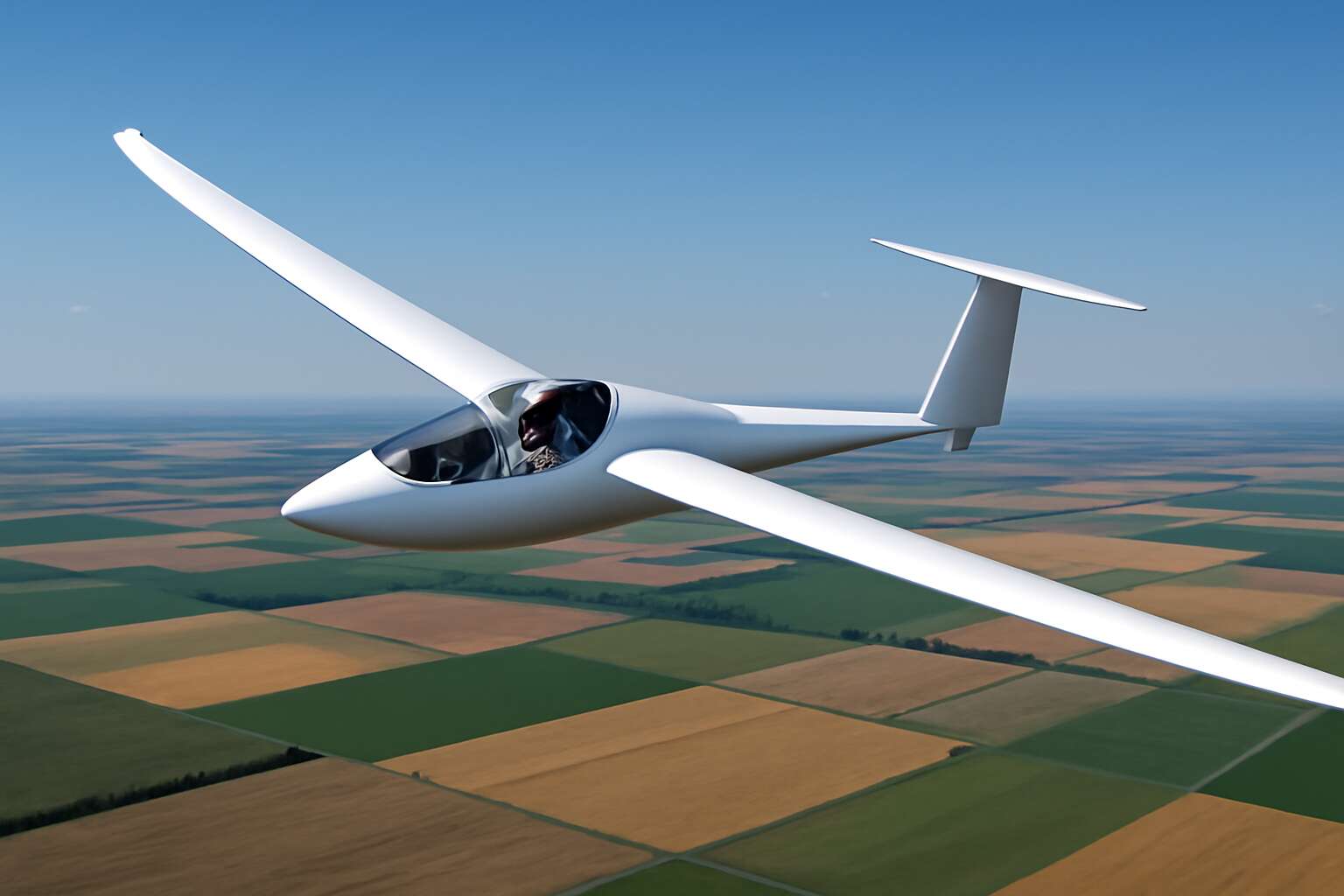
Pathway Overview: From Glider to a Private Pilot Credential
What the transition entails
South Africa’s skies are a proving ground for aspiring pilots. More than 40% of SA pilots began their training in gliders, a fact that highlights how early stick-time shapes skill. “The glider teaches discipline before speed,” says an experienced instructor, and that discipline pays off when you move into powered flight. This pathway overview maps the journey from a glider experience to the Private Pilot Credential.
- Ground school and theory
- Dual flight time
- Solo and cross-country practice
- Written and practical assessments
From glider to ppl, the transition is a measured climb. It centers on theory, dual time, solo flights, and the checkride. The typical route includes:
Each step strengthens navigation and decision-making, with aerodynamics becoming intuitive rather than theoretical. That transfer of knowledge keeps you confident as you graduate from gliders to powered aircraft.
Key milestones in the training journey
In the SA skies, ambition gathers like dusk over the Karoo—quiet and persistent. More than 40% of South Africa’s pilots began their careers in gliders, a statistic that reveals how early stick-time shapes judgment. From glider to ppl, the arc is a measured ascent where discipline outruns speed and every glide teaches patient precision.
This pathway unfolds as a deliberate rite: theory informs flight, and each milestone hardens decision-making. Trainees graduate from classrooms to the controls, learning nav literacy and weather sense until the air becomes a language you speak with confidence.
- Navigation intuition grows under SA skies
- Weather literacy sharpens
- Cockpit discipline becomes instinct
Ultimately, the journey from glider to ppl is more than a switch of machines—it’s a quiet covenant between risk and reason. I have watched the transition tighten a pilot’s grip on the calm in the cockpit and turn doubt into direction.
Differences between glider training and powered flight
Pathways between air and aspiration bloom like dawn over the Karoo. From glider to ppl, the journey is a tale of quiet judgment learning to speak with the sky; glider training teaches energy management, thermals, and air-sense, before engines and instruments enter the scene.
- Power vs glide: Propulsion introduces engine management, climb performance, and power-on procedures that alter flight planning and energy control.
- Launch, flight, and recovery: Gliders rely on winch or aerotow; powered flight uses engines, start procedures, and runway discipline.
- Navigation and airspace: gliders focus on air sense and weather intuition; PPL training adds radios, airspace rules, and cross-country routing.
Ultimately, the arc from glider to ppl is a covenant between risk and reason, turning hesitation into direction and gifting pilots with a calm, confident cockpit as they chart their path across SA skies.
Why pilots pursue this route
Pathway Overview: From Glider to a Private Pilot Credential opens a horizon that fuses quiet mastery with practical ambition. In South Africa, many aviators start by listening to the sky in a glider, where every lift, drift, and thermal nudges the mind toward energy control rather than horsepower. The pathway from glider to ppl is a study in cadence and control, teaching weather literacy, sustained focus, and a calm decision-making rhythm before engines fill the scene. That route—glider to ppl—blooms into cross-country curiosity as the landscape slips past Cape towns and Karoo horizons.
- Energy management and air sense precede radios and runways.
- Weather intuition grows into confident cross-country routing across SA skies.
- A calm cockpit culture joins risk assessment with clear, deliberate decision making.
Across South Africa’s skies, the glider to ppl journey binds humility with ambition, turning hesitation into direction as horizons widen!
Eligibility and Prerequisites
Medical requirements for light aviation
The sky wears velvet at dawn, and I hear it whisper to those who listen. In South Africa, the call to pilot a glider is a patient, disciplined summons—an invitation to rise with quiet courage and weigh every breath against the wind.
Eligibility rests on a few steadfast gates, clear and fair:
- Minimum age per SA CAA rules for training and solo flight
- English proficiency for radio and navigation
- Medical certificate appropriate for light aviation
- Current fitness and a clean medical history with a licensed examiner
These gates are not iron but invitation; pass them and the glider to ppl journey begins, the sky a patient mentor rather than a roaring judge!
Age, language, and citizenship considerations
South Africa’s skies are patient tutors, and the first lesson is simple: meet the gates, and the glider to ppl journey begins. Eligibility rests on a handful of steadfast gates: age, language, medical, and fitness. Each gate is a doorway, not a trap, inviting you to step up and prove your readiness for the quiet discipline of gliding.
- Minimum age per SA CAA rules for training and solo flight
- English proficiency for radio and navigation
- Medical certificate appropriate for light aviation
- Current fitness and a clean medical history with a licensed examiner
Citizenship considerations rarely shut the door in SA, but you need valid identity and residency documentation to align with SA CAA requirements. For this path, English fluency and lawful presence keep the wind in your favour and your paperwork tidy.
English proficiency and knowledge tests
South Africa’s airfields cradle ambition with a whisper of wind and a spark of challenge! SA gliding interest shows a growing uptick in aspirants each season, signaling a love for the sky. The bridge from glider to ppl rests on two steady gates: English proficiency and knowledge tests.
Knowledge tests probe radio and navigation fluency, meteorology basics, and understanding of air-law. Preparation flows from study guides aligned to SA CAA standards, with questions framed in clear English. Here are core areas to expect:
- Radio telephony and phraseology
- Navigation and map reading
- Meteorology and flight planning basics
- Aviation law and safety rules
English proficiency is not merely a checkbox; it is the wind in your sails for radio comms, weather reports, and airspace chatter. Those who pass the knowledge tests gain access to a journey of quiet precision and lifelong learning in the SA gliding community.
Residency and club membership requirements
Across South Africa, gliding communities are growing; clubs report a 14% uptick in new members last season. Eligibility hinges on residency and belonging to a recognised gliding club. The SA scene thrives when locals and visiting aviators alike join clubs, for the hangar becomes home and wind whispers directions. The journey from glider to ppl starts there, in shared mornings, patient mentors, and the quiet rhythm of wing and sky.
- Join a recognised gliding club and sign on as a trainee member
- Provide identification and proof of SA residency to the club
- Work with instructors to plan your first supervised flights and milestones
With that foundation, the airfield widens to include training routes, friendships, and the exacting joy of gradual mastery.
Training Structure and Milestones
Ground school topics relevant to the license
From the hush before takeoff to the satisfying click of the canopy, the training structure for the glider course is a measured ascent. In the journey from glider to ppl, rigorous ground school provides the map, while patient practice translates theory into instinctive control and calm under pressure!
Core ground-school topics build a durable framework:
- Aerodynamics and energy management
- Meteorology for gliding and weather interpretation
- Air law, operational procedures, and airspace
- Navigation and flight planning with stay-within-sight discipline
- Human factors and decision making
Milestones arrive through a cadence of assessments, from theory familiarity to a rigorous flight test, each step reinforcing readiness and sharpening focus for the next phase of the journey.
Flight training phases: from basics to cross-country
Progress in gliding isn’t a mystery novel—it’s a staged ascent. In the training shed and the air above, a veteran instructor’s maxim still lands: “Slow is fast, and precision writes the flight plan.” That philosophy underpins the Training Structure, where each phase builds coordination, judgment, and calm under pressure.
Flight training phases roll out from basics to cross-country, with milestones that cue confidence and safety. The journey reads like a ladder: start with fundamentals of control, advance to steady glide and energy management, then tackle navigation and weather interpretation before attempting longer legs. The path from glider to ppl—the transformative arc—culminates in a formal flight test and milestone checks.
- Foundational control and energy management
- Thermal awareness and circle-to-glide transitions
- Navigation, weather interpretation, and flight planning
- Cross-country preparation and decision making
- Final flight test and milestone validation
That cadence keeps the experience readable, almost cinematic, with each session earning its place in the logbook and every milestone sharpening focus for the next stage.
Solo flight rules and safety milestones
Training Structure for the glider journey unfolds like a patient rural harvest: deliberate and honest. ‘Slow is fast, and precision writes the flight plan’ rings through the shed and the air, guiding every lesson I’ve watched. For the South Africa gliding journey, milestones anchor learning: control, energy management, and navigation with weather sense—each session sharpening judgment under pressure. The cadence is cinematic: fundamentals lead to steady glide, then longer legs, all logged as proof of progress.
Solo flight rules and safety milestones turn that training structure into a living map. They remind us that confidence is earned in checks, not bravado.
- Pre-solo checks and simulated route planning
- First solo flight under instructor oversight with safety margins
- Progression toward independent cross-country planning and flight-test readiness
These milestones frame the journey from glider to ppl as a measured ascent, where patient effort meets steady, safe progress.
Checkrides and licensing steps
Training in the glider world is not a sprint; it’s a patient climb through milky skies. In South Africa, the structure guides learners toward certainty, shaping the journey from glider to ppl with a steady, ritual cadence. The air itself seems to approve the pace!
Milestones become a living map, not mere checkpoints. They are the spine of the syllabus, bending with weather and focus. These marker moments act as cinematic cues that sharpen judgment.
- Foundational checks and scenario training under supervision
- Incremental solo flights that build precision and confidence
- Cross-country planning and navigation practice aligned with weather sense
Licensing steps and checkrides rise like a dawn stair: knowledge assessment, flight-test readiness, and the final sign-off that confirms a matured pilot. The glider to ppl path remains a measured ascent—quiet, disciplined, and safe, where every check writes the next page.
Timeline guidance and scheduling tips
Training in the glider world unfolds like a careful ascent rather than a sprint. In South Africa, the structure gives learners a steady rhythm, turning the journey toward a glider to ppl into a map they can read. Milestones become markers that bend with weather and focus, sharpening judgment rather than chasing time.
- Weather and daylight shape the cadence more than fixed timetables.
- The club and mentor network keeps the syllabus living and responsive.
- Milestone reviews anchor progress, with safety always at the core.
Scheduling within this framework depends on flexibility, patience, and honest self-review. In this path, pilots map their progress against seasonal conditions, club calendars, and personal commitments, allowing momentum to build without compromising safety.
Costs, Funding, and Equipment
Typical training costs and budgeting
In South Africa, roughly 60% of aspiring pilots say cost is the biggest hurdle to turning a dream into the sky. That reality shapes every choice along the glider to ppl journey, from club selection to how patiently you budget the pace of your learning!
- Club membership and hangar fees
- Aircraft rental or tow charges
- Ground school and examiner fees
- Medical, insurance, and safety gear
Equipment for a glider pilot is often modest at the start, with shared gliders, radios, and basic personal gear; over time you accumulate a dependable kit as you advance on the glider to ppl path. I’ve learned the experience is as much about community as metal and wings.
Club memberships, aircraft rental, and instructor fees
In South Africa, roughly 60% of aspiring pilots say cost is the biggest hurdle. That reality shapes every choice on the glider to ppl journey, from club selection to budgeting pace.
Costs typically break down into essential categories:
- Club memberships and hangar fees
- Aircraft rental or tow charges
- Ground school and examiner fees
- Medical, insurance, and safety gear
Funding often arrives as a mix of club sponsorships, scholarships, and staggered payment plans; many clubs encourage shared use and seasonal rentals to keep the dream within reach.
Equipment for a glider pilot is intentionally modest at first—a shared glider, radios, and personal safety gear— with a dependable kit building over time, a reminder that the journey is as much social as mechanical.
Gliders suitable for PPL conversion and equipment upgrades
Costs in the glider to ppl journey are real, but manageable with a clear plan. In South Africa, the price tag often feels bigger than the dream, so budgeting pace matters as much as the learning curve. Costs cover upfront access—club membership and hangar space—and ongoing usage, training time, and the exam process.
Funding typically arrives as a mix: club sponsorships, scholarships, and staggered payment plans. Seasonal rentals can stretch affordability without compromising progress.
- Club sponsorships or bursaries
- Milestone-linked scholarships
- Flexible payment plans
Equipment for the journey stays modest at first—a shared glider, radios, and personal safety gear—then a dependable kit grows with time.
- Headset and radio setup
- Protective clothing and gloves
- Flight log and basic tools
Scholarships, grants, and sponsorship options
Costs in the glider to ppl journey are tangible but not insurmountable. In South Africa, the price tag often dwarfs the dream, demanding a disciplined budget: club membership, hangar access, flight hours with instructors, and the exam process. A clear plan keeps ambition airborne and avoids the grim reaper of surprise invoices. The right mindset turns expense into an investment in skill and confidence.
Funding usually arrives as a mix: club sponsorships, bursaries, and staggered payment plans. Seasonal rentals can stretch affordability without stalling progress. Options to explore include:
- Club sponsorships or bursaries
- Milestone-linked scholarships
- Flexible payment plans
Equipment for the early phase stays modest—shared gliders or club aircraft, radios, and personal safety gear—then a dependable kit grows. Expect a headset and radio setup, protective clothing, gloves, a flight log, and the basic tools that keep the journey safe and organized.
0 Comments