
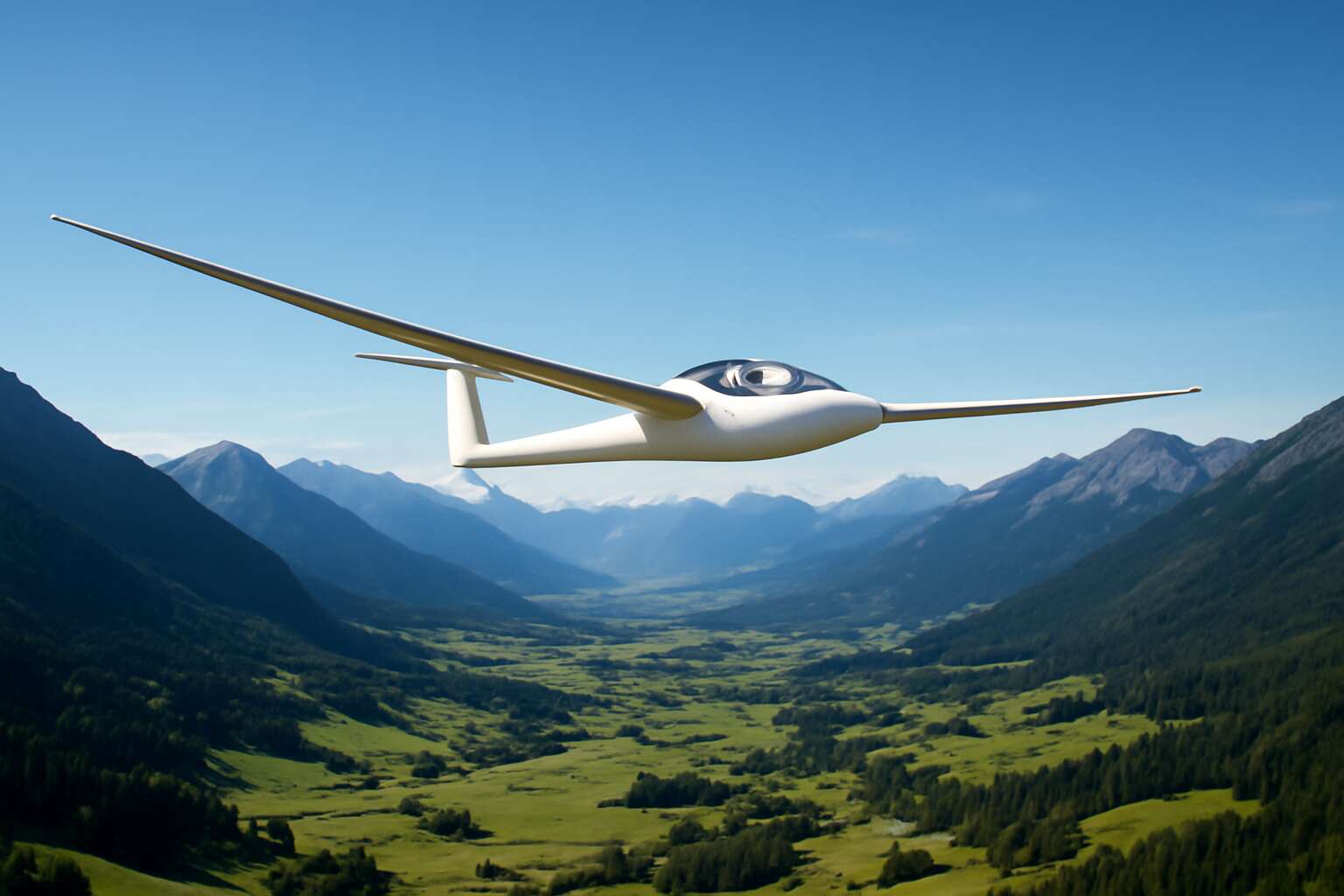
History and Evolution of Sailplanes
Origins of gliding and early experiments
Skyward winds have always teased the human dream of weightless travel. Early glider diaries tell of more than 2,000 glider flights carved into history, a testament to patient courage and wind-woven engineering. For lovers of gliders aircraft, the wind is a patient tutor. From the first gliders to the shifting rules of flight, we see a story where imagination meets air and becomes technique!
Origins of gliding began with Britain’s Sir George Cayley, who laid fixed-wing principles. In Germany, Otto Lilienthal’s glide trials demonstrated controlled descent. Across the Atlantic, Octave Chanute bridged theory and practice, inspiring a new generation of aviation pioneers.
In South Africa today, gliding clubs under the sun keep the flame alive, turning wind into study and sport. From the Cape to the Highveld, local pilots chase wisps of lift across veld and valley, weaving a living lineage of gliders aircraft that informs modern design and training.
Pioneers who shaped aviation
Winds whisper a promise: to ride the air without engines. The tale of sailplanes glides like a sunlit hymn over South Africa’s veld and coast.
From Cayley’s fixed wings to Lilienthal’s controlled descent, and Chanute’s bridges between theory and practice, early gliders carved a path that modern gliders aircraft still honor.
These pioneers are windswept mentors. Here are a few who lit the way:
- Otto Lilienthal — the “Glider King” who proved controlled descent could be tamed with wing shape and balance.
- Octave Chanute — a bridge-builder whose cross-country exchanges linked theory to practice, shaping the sport’s early culture.
- Wright brothers — experiments in gliding seeded the modern understanding of aerodynamics and powered flight alike.
From those early drafts to today’s high-performance machines, the lineage lifts South Africa’s dreamers, inviting them to ride the long arcs of the sky.
Key milestones in sailplane development
Gliders have always been the patient, wind-wrinkled philosophers of flight. Across South Africa’s airfields, the history of sailplanes unfolds like a well-heeled social season—always elegant, sometimes dramatic. On a good day, a sailplane can stay aloft for six to eight hours, coaxing lift from a random thermal and turning sky into a drawing room.
- Wood-and-fabric roots created light, repairable airframes with quiet elegance.
- 1950s–60s added cantilever wings and airbrakes for cross-country control.
- Postwar composites—fiberglass and resins—delivered smoother, higher-aspect shells.
- Open and 15m classes refined competition-driven design goals.
From those early drafts to today’s high‑performance machines, their lineage keeps South Africa’s skies lively. The modern era of gliders aircraft—carbon fiber, laminar-flow airfoils, and precise instrumentation—lets pilots chase long, silent arcs.
Impact of socio-economic factors on gliding
Across South Africa, gliders aircraft have quietly rewritten the rules of flight! Dozens of clubs host training and weekend sorties, proving the sky is accessible to more people than ever—“The sky is a patient teacher,” a SA pilot often says.
Socio-economic winds shaped who flies and where. Costs for training, hangar space, and insurance determine entry points, while public policy and club culture decide airspace access and safety norms. The postwar shift to composites and laminar airfoils opened higher performance at lower upkeep, broadening the sport’s appeal.
- Club funding and scholarships extend participation
- Policy and airspace access affect training routes
- Volunteer maintenance taps local skills
- Domestic manufacturing supports repairability and cost control
Today, gliders embody a history of quiet performance and civic-minded engineering—where elegance meets pragmatism and the skies belong to communities, not just aircraft.
Notable historic sailplanes and their legacies
In aviation folklore, sailplanes have clocked more than 2.5 million flight hours—proof that engine-free adrenaline still puts on a show.
In South Africa, the lineage of gliders aircraft nods to quiet engineering and community airfields, where clubs keep the sport accessible and the skies friendly.
- Grunau Baby — the 1930s pocket-sailplane that trained a generation and showed small classics can win big.
- Schulgleiter SG 38 — the thrifty starter that turned modest airfields into classrooms across Europe and Africa.
- Schleicher Ka 6 — the postwar workhorse fusing approachable handling with cross‑country dreams.
From these legacies, modern gliders embrace slender profiles, laminar airfoils, and a quiet confidence that the wind itself can be steered.
Design and Engineering of Sailplane Technology
Wing geometry, lift, and performance
In the SA skies, gliders aircraft prove that elegance can outrun gravity—when the wing works just right. On a good thermal day a sailplane can stay aloft for 6 to 8 hours, turning air into a long, silent conversation with the weather. Design and engineering focus here is on wing geometry that whisks lift with minimal drag, not on speed records, but on patient, efficient performance.
- High aspect ratio wings that reduce induced drag and extend soaring.
- Laminar-flow airfoils and lean fuselages for smooth lift distribution.
- Airbrakes and spoilers to manage energy during thermals and landings.
These choices translate into a tangible performance tapestry: wing twist, surface control, and meticulous balance yield lift with efficiency. In South Africa, the climate writes generous chapters for testing, where engineers chase the sweet spot between light airframes and robust glide, proving sailplane technology remains a witty blend of art and physics!
Fuselage design and cockpit ergonomics
In the theatre of South African skies, the fuselage of gliders aircraft becomes a dancer in the wind. Every centimeter is tuned to coax lift while silencing drag—a teardrop silhouette that whispers through air. Inside, cockpit ergonomics turn flight into a conversation: seats cradle the spine, controls fall to hand, and the instrument panel invites quick, confident reading at a glance.
- Teardrop cross-section and smooth fairings to nurture laminar flow along the length
- Adjustable, supportive seating and an instrument panel positioned for natural reach
- Canopy design that merges visibility, sun protection, and effortless entry/exit
- Lightweight composites and balanced tail geometry for stable handling in thermals
Here, climate and craft meet: coastal zephyrs, inland thermals, and long, patient glides. The fuselage and cockpit aren’t mere shells but the nerves of the sailplane, translating physics into grace!
Materials, manufacturing, and weight reduction
Design and Engineering of Sailplane Technology unfolds as a conversation between air and alloy. For gliders aircraft, every gram saved translates to longer, sweeter glides. Skin laminates weave carbon and glass into a light skin, while sandwich cores add stiffness without weight—coaxing serene performance from SA skies.
Manufacturing casts a spell of precision: autoclave cures for aligned fibers, resin infusion to reduce voids, and clever bonding that forgives rivets in favor of continuous joints. Lightweight cores and skins join to form wings that feel buoyant in every thermal.
- Prepreg carbon fiber layups
- Honeycomb core sandwich panels
- Adhesive bonding over rivets
- Weight-optimized aeroelastic analysis
All told, the craft scales with the coastlines and mountains of South Africa, where materials become music in the air.
Aerodynamics, drag reduction, and efficiency
In the still SA dawn, a glider slices the air with a whisper of polished metal: lift-to-drag ratios in the 40s, peaking near 60:1. For gliders aircraft, every gram of drag shaved translates to longer, sweeter glides.
Design and engineering focus on aerodynamics: shaping for laminar flow, high aspect ratio wings, and clean, continuous joints that minimize parasitic drag.
- Laminar-flow surfaces and surface finish
- High aspect ratio wings for efficient lift
- Spoilers and airbrakes integrated with clean joints
Advanced tools like computational fluid dynamics and wind-tunnel testing tune aeroelastic behavior, delivering lighter skins, optimized cores, and tailorable twist that keeps speed gentle and thermals forgiving.
South African skies reward engineering that treats drag as currency, letting gliders aircraft glide longer on every thermal while the coastline and mountains remain a dramatic backdrop.
Control systems and stability
For gliders aircraft, control-system integrity translates into safety and smooth gliding. The edge comes from how the cockpit talks to the wing and tail—tiny actuator moves yielding predictable responses during thermals or gusts. Clean hinge lines, integrated spoilers, and low-drag joints keep the airframe tame while you seek lift. Mass-balanced tails and flutter margins complete the package, giving a steady hand when the air goes lively.
Flutter suppression, yaw damping, and robust actuation are not cosmetic. Design teams blend aeroelastic tuning with reliable hardware to keep sailplanes stable from takeoff to landing. Key elements include:
- Flight-control surfaces with clean hinges to minimize drag
- Spoilers and airbrakes integrated with reliable joints
- Mass balancing and robust actuators to prevent flutter
In the South African skies, such engineering translates into safer, more efficient gliding experiences!
Types and Configurations of Sailplanes
High-performance sailplanes
Gliders and their configurations shimmer across SA’s open skies, where every lift reveals a delicate balance between wing, weight, and will. “The sky is a classroom,” a veteran pilot loves to say, and the lesson is clear: sailplanes come in nuanced forms that reward patient understanding. From silent, single-seat racers to patient two-seat tutors, these machines embody different purposes, each shaping how gliders aircraft trace routes through the air.
Configurations diverge with purpose, offering a spectrum that ranges from stripped-down competition machines to forgiving trainers.
- Single-seat high-performance sailplanes for cross-country precision
- Two-seat training gliders for instruction and dual control
- Self-launching motor gliders with integrated propulsion
- Retractable or fixed gear variants optimized for field operations
In South Africa, the local gliding scene favors rugged launches, field-accessible airstrips, and a culture of patient, wind-watching pilots who turn each thermal into a dialogue with the sky.
Training and club gliders
Across South Africa, more than 30 gliding clubs log thousands of soaring hours each year, turning the sky into a patient classroom—gliders aircraft built for endurance and grace. They train voices in lift and patience, teaching that every thermal is a conversation between pilot and air.
Within this family, a few configurations anchor training and club operations.
- Dual-control cockpits for instructor–student pairing
- Field-friendly gear and forgiving landing gear designs
- Simple, robust instrumentation prioritized for reliability
- Lightweight airframes that reward calm, precise handling
These choices keep the craft approachable for newcomers and dependable for daily club flights, weaving patience into the fabric of SA’s gliding culture.
Self-launching and engine-assisted variants
South Africa’s skies feature two main configurations for gliders aircraft: self-launching and engine-assisted variants. Across SA, more than 30 gliding clubs log thousands of soaring hours each year, proving lift and patience make flight accessible. Self-launching models carry their own power for an independent climb, while engine-assisted sailplanes use a built-in motor for launch and then glide efficiently on the wing.
- Self-launching motor gliders with retractable propellers for independent takeoffs
- Engine-assisted sailplanes that provide powered climbs before transitioning to pure gliding
- Hybrid training variants with robust gear, forgiving handling, and reliable avionics
Both paths emphasize reliability and gentle handling, ideal for training clubs and private pilots alike. The result is a versatile family that adapts to SA’s varied terrain and winds, keeping options in the air for years to come.
Towed launch vs winch launch methods
Two classic configurations shape how gliders aircraft take to SA skies: tow and winch. Aerotow pairs a glider with a tow plane to climb to altitude before release, a smooth segue into sustained gliding. Winch launch, by contrast, uses a ground-based winch to haul the sailplane skyward in seconds, followed by a clean, efficient descent.
- Aerotow: flexible for heavier gliders, great for open-field layouts and longer cross-country flights.
- Winch launch: rapid altitude gain, minimal ground equipment, and a compact footprint for busy clubs.
For clubs, the choice often hinges on field size, wind patterns, and maintenance comfort. Across South Africa’s varied airfields, these configurations keep training costs moderate and operations reliable, delivering that first graceful release with a grin.
Cross-country and record-setting configurations
In gliders aircraft terms, cross-country configurations balance weight, ballast, and weather, turning a quiet flight into a strategic chase for altitude and distance. Modern sailplanes routinely boast glide ratios around 60:1, letting thermals stretch hours of progress across SA’s varied landscapes—from the Karoo’s arid plains to the highveld ridges.
Two natural configurations stand out for cross-country and record quests:
- Cross-country cruiser: extended wings, mindful ballast, and long-leg flight planning.
- Performance streamliner: reduced drag, clean aerodynamics, and high-speed cruise between thermals.
- Record-seeking setup: precise ballast, optimal wing loading, and data logging for post-flight analysis.
These arrangements keep gliding clubs nimble, letting pilots chase distances with elegance while maintaining safety and reliability above SA airspace.
Electric and hybrid propulsion in sailplanes
“The wind writes its own story,” says a seasoned SA glider pilot. Electric and hybrid propulsion are shaping gliders aircraft, extending soaring days across South Africa without losing the art of pure glide. They blend quiet power with tradition, inviting new faces to the sky.
Inside these machines, motors tucked in the nose or along the fuselage, paired with lightweight batteries, let a glider lift off or cruise between thermals with less ground effort. Hybrid layouts use a small engine as a range extender, keeping the sailplane light and safe in variable weather.
Here are common configurations ensuring seamless integration into clubs and countryside airfields:
- All-electric self-launch and energy-sipping cross-country legs
- Hybrid power with a small engine for extended soaring
- Modular battery systems for easy upgrades and maintenance
Operations, Training, and Safety in Sailplane Flying
Getting started in gliding: clubs and introductory flights
Silence propels the sky into poetry, and gliders aircraft—two words you’ll hear in clubs—are more than machines; they are patient teachers and daring confidants. In South Africa, clubs weave communities around the quiet drama of wind and wing, where newcomers learn to read thermals and the land’s breath. The sport rewards careful listening and a fearless regard for risk, balanced by a culture of respect.
- Introductory flight with an experienced instructor
- Club-based training days that build confidence
- Mentoring and social events that sustain passion
Operational rhythm centers on clear weather briefings, disciplined airfield etiquette, and the gentle math of towing or winching. Safety stands as a shared pact; every flight begins with checks, every decision honors other airspace users, and the club becomes a stitched tapestry of mutual care.
Licensing, ratings, and training pathways
In the quiet choreography of gliders, operations hinge on weather wisdom, airfield etiquette, and rigorous preflight checks. For gliders aircraft licensing, SACAA—South Africa’s Civil Aviation Authority—sits at the helm, while clubs weave safety into every tow and launch as pilots learn to read wind and lift.
Training pathways unfold from an inviting introductory flight to solo flights and progressing toward ratings such as cross-country endorsements and instructor qualifications. The path is club-centered, practical, and paced to build confidence while reinforcing safety and shared responsibility.
- Introductory flight and solo endorsement
- Private glider license or equivalent rating
- Cross-country and instructor endorsements
Safety remains a living discipline: clear weather briefings, airspace awareness, and consistent checks anchor every flight. SA clubs foster a culture where risk is acknowledged, procedures are followed, and the sky is shared with respect for other airspace users and the wind’s subtle language.
Safety protocols, weather planning, and risk management
Operations in the world of gliders aircraft hinge on quiet choreography: clean airfields, precise tow or winch coordination, and thorough preflight checks that catch every stray feature from a loose bolt to a missing pitot cap. Weather wisdom guides every decision, and SA clubs cultivate discipline, clear comms, and a mutual respect that keeps the sky safe for all pilots!
Training in sailplane circles emphasizes hands-on practice and calm, deliberate decision-making. Instructors blend technique with risk-aware thinking, so pilots learn to read lift, turbulence, and weather fronts—and to back off gracefully if conditions sour.
Safety remains a living discipline: weather briefings, scenario-based drills, and post-flight reviews that turn every flight into a learning loop. The result is steadier hands, steadier minds, and safer skies for the glider community.
Maintenance, inspections, and part replacement
Operations around sailplane maintenance demand quiet discipline and precise timing. Clean airfields, orderly tow and winch setups, and thorough preflight checks keep the flight line calm and reliable. Maintenance planning drives part replacement and service intervals, ensuring every fastener and seal performs for gliders aircraft.
- Scheduled inspections
- Torque and lubrication checks
- Canopy seal verification
Training emphasizes hands-on practice and calm decision-making. Technicians and pilots learn to read wear, verify components, and carry out part replacements with clear checklists.
Safety remains a living discipline: post-flight debriefs, drills, and updated procedures from every flight. Clear communication and mutual respect keep the skies safe for all.
Competition, performance metrics, and etiquette
Operations at sailplane competitions demand quiet discipline on the flight line, where tow planes align and timing rests in every breath. Etiquette guides radio calls and patient pauses as gliders aircraft prepare to meet the air, shaping smooth launches and precise turns.
Training blends theory with hands-on drills, cultivating calm decision-making and teamwork. Instructors shepherd wear checks, component verifications, and checklist-based replacements. Performance metrics for gliders aircraft competition track distance, speed, and glide efficiency; essential measures include:
- Distance per leg
- Average speed and speed-to-fly
- Glide ratio and energy management
Safety stays a living discipline: post-flight debriefs, drills, and updated procedures after each sortie. Clear communication and mutual respect keep the skies safe for all, letting South Africa’s gliding culture shine with professional grace.
0 Comments