
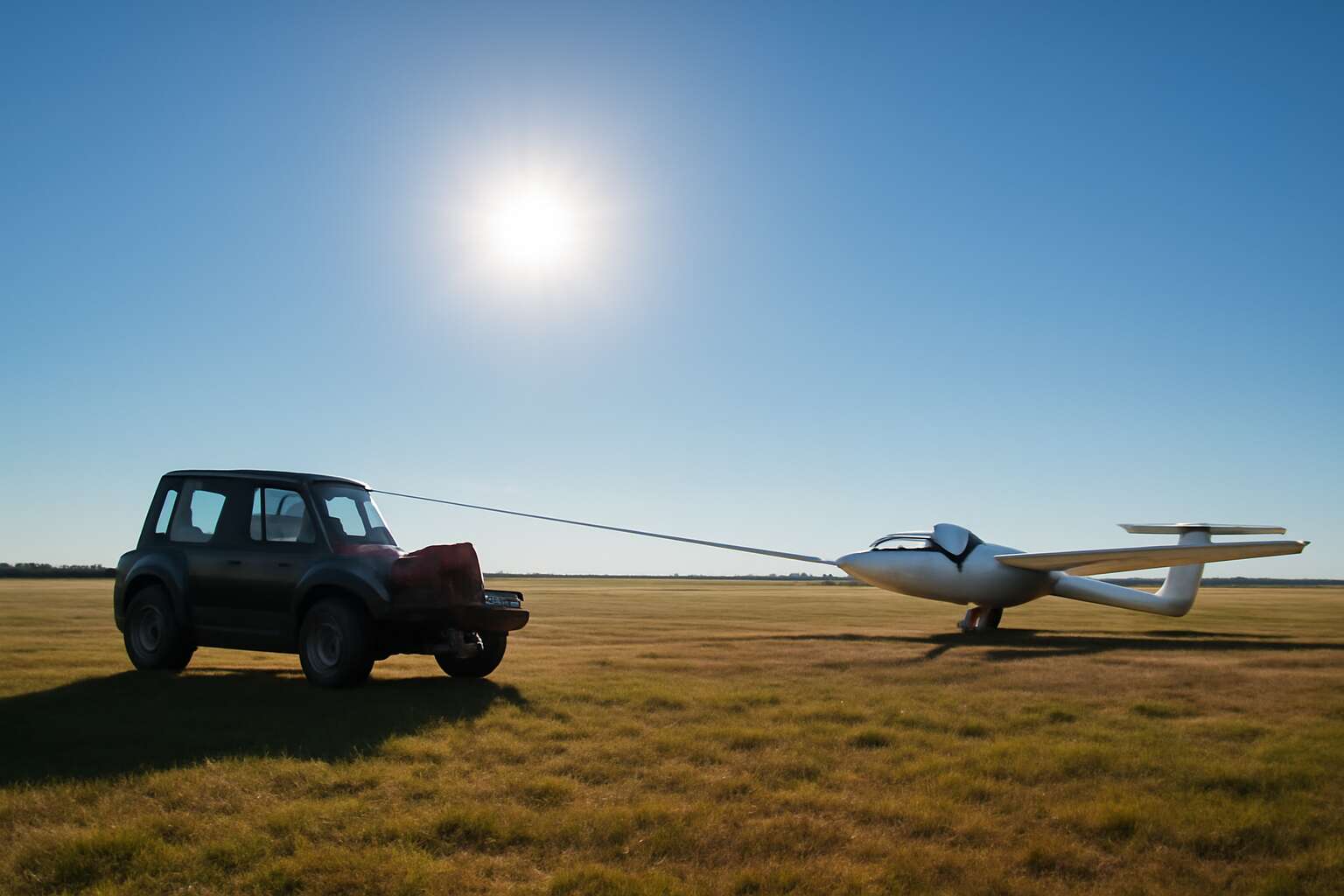
Overview of winch systems for gliding
What is a glider winch and how it works
Across South Africa’s soaring clubs, winch launches propel flights before the sun climbs. Roughly 60% of training sorties begin with a winch-assisted takeoff, a statistic that hints at the elegance and peril of these machines. A glider winch is the engine of ascent, a tether that tugs at the horizon.
From a distance, a winch is a precise blend of power and control: a motor drives a drum, cable pays out, and a release mechanism grants flight to the glider. The line tightens as lift gathers and the aircraft climbs toward the thermals with ghostlike grace.
- Power source: electric motor or diesel
- Drum, spool, and cable: steel or kevlar
- Release mechanism: hook and interlock
- Control and safety: operator cabin and interlocks
After launch, the winch rewinds in a measured arc, a quiet ritual that resets for the next ascent.
Key components of winch launch systems
In South Africa’s skyward clubs, the glider winch is the quiet workhorse that makes ascent possible. It blends power with control, turning a short pull into a long, patient climb. Last season, winch launches accounted for roughly 60% of training sorties, underscoring its role as both a reliable workhorse and a high-stakes machine.
Viewed up close, the system is straightforward but finely tuned: a motor drives a drum, cables pay out, and a release hook is interlocked for safety. The magic is in the pace—steady tension, precise release, and a rewind that resets the arc for the next flight.
Key components include:
- Power source: electric motor or diesel
- Drum, spool, and line: steel or Kevlar
- Release mechanism: hook with interlock
- Control and safety: an operator cabin with interlocks
Together, these elements support safe, repeatable launches and minimal downtime.
Mechanical vs hydraulic winches
In South Africa’s skies, the glider winch stands as the quiet architect of ascent—a single, measured pull that ends in a long, patient climb. Power paths split here: the mechanical winch, rugged and straightforward, and the hydraulic system, which translates fluid might into whisper-quiet control.
Mechanical winches rely on a drum, a steel or Kevlar line, and a direct-drive motor. They are prized for rugged reliability and field legibility, especially in remote clubs where simplicity keeps downtime low.
- Direct drive and easy maintenance
- Strong performance in varied South African conditions
- Lower initial cost and shorter setup times
Hydraulic winches move with smooth, adjustable line speed and refined release control, delivering steadier ascents and reduced wear on the release mechanism. The choice hinges on maintenance capacity, power availability, and the club’s safety and altitude requirements.
Safety considerations for winch launches
The glider winch is the quiet heartbeat of South African airfields—a single, decisive tug that starts a patient, unhurried climb. Systems vary, but the aim stays constant: reliable lift you can trust when the clouds decide to cooperate.
Beyond the mechanical vs hydraulic debate, winch configurations hinge on field power, maintenance capacity, and safety culture. The right balance yields smooth launches, predictable line tension, and a welcome sense of control for pilots and ground crew alike.
Safety considerations for winch launches are inseparable from the people who run them. Clear comms, weather awareness, and equipment integrity keep momentum steady and risk manageable, while emphasis on training and emergency readiness helps the club weather surprises without drama.
- Weather awareness and wind limits
- Line integrity and harness compatibility
- Ground crew communication and emergency readiness
A few well-worn habits keep launches safe and predictable in SA skies.
Performance metrics and typical use cases
Across South Africa’s gliding clubs, the glider winch is the quiet engine that turns still air into possibility. A well-chosen system balances field power, maintenance cadence, and safety culture, delivering launches that feel almost ceremonial—steady, predictable, and ready when the sky invites a patient climb.
Performance metrics anchor every launch. Key measures include line tension at lift-off, launch acceleration, and climb rate under varying wind conditions.
- Line tension stability and rope wear
- Launch duration and release timing
- Response to gusts and crosswinds in climb
Typical use cases span beginner training days, club practice, and cross-country prep, thriving on calm mornings or winds that demand discipline. In SA, the glider winch isn’t just hardware—it’s a dependable routine that helps pilots read the sky and chase the horizon with confidence.
Benefits and use cases of glider winch launches
Cost-effective launch method for gliding clubs
In South Africa’s gliding clubs, a single glider winch can turn a chilly, still morning into a chorus of takeoffs—without burning the budget. Clubs report up to 20% more flying hours on busy weekends, all while keeping operations approachable and sustainable.
- Cost-efficiency: lower upfront investment than aerotow systems, with predictable operating costs
- Reliability and simplicity: fewer failure points and faster maintenance cycles
- Training versatility: friendly for new pilots and for short-hops during solo training
- Operational flexibility: quick launches during varying weather, maximizing air time
Use cases span club nights, training days, and recovery flights. A winch-based system thrives where space and budget are limited, letting pilots launch from small airfields, raise the next generation, and extend seasonal roves when conditions cooperate.
Site and field requirements for winch launches
On a crisp South African dawn, a glider winch can deliver up to 15 launches before coffee—turning quiet air into a chorus of takeoffs.
Lower upfront costs than aerotow and predictable operating expenses make the glider winch a prudent, dependable choice for clubs.
- Compact field footprint
- Budget-friendly ongoing costs
- Gentle learning curve for new pilots
Use cases include club nights, weekend training days, and recovery flights when weather cooperates, extending seasons and creating a steady pipeline for pilots.
Site and field requirements center on safety and practicality: clear takeoff and landing corridors, rotor-free zones, firm anchors, and ample space for rope and crew.
Performance benchmarks: line length and speed
At dawn’s edge, the glider winch turns silence into lift, a patient conductor summoning wings to the sky. In seasoned clubs, it can deliver a dozen launches before the kettle sings—proof that efficiency and grace can share the morning!
Benefits and practicality align for flying clubs:
- Compact field footprint accelerates casual airfields
- Lower upfront costs than aerotow and predictable ongoing expenses
- Gentle learning curve for new pilots and quick turnover
Use cases include club nights, weekend training days, and recovery flights when weather smiles at the runway. Performance benchmarks for the glider winch: line length typically spans 800–1,000 meters, with rope speed around 25–30 meters per second, delivering a crisp, controllable launch experience.
Use cases: training, cross-country, and club operations
In South Africa’s dawn-lit airfields, a glider winch can spark a dozen flights before the kettle sings—a quiet calculation of lift born from patience and discipline. It turns silence into momentum, coaxing eager wings toward the pale blue and beyond.
Benefits and practicality align for flying clubs, delivering a compact field footprint, cost-conscious operation, and a learning curve that welcomes newcomers while keeping the fleet turning with confidence.
- Compact field footprint fits casual airfields
- Lower upfront costs and predictable ongoing expenses
- Gentle, approachable launches that boost turnover
Use cases span everything from club nights to weekend training days, and even recovery flights when weather smiles at the runway. For broader horizons, training, cross-country, and club operations rely on the steady rhythm of the glider winch to maintain momentum.
Comparing winch launches with towplanes
A glider winch can spark a day’s soaring with a fraction of the expense and space demanded by towplanes. In South Africa’s dawn-lit airfields, it delivers quick, controlled launches that keep clubs buzzing from first light. Compared with towplanes, the winch trims fuel use and maintenance while offering a steady cadence—turning quiet fields into momentum as lift threads climb skyward.
- Compact footprint that fits short runways and busy club strips
- Lower capital investment with predictable maintenance and fuel spend
- Launches that are easy on pilots and machines, boosting turnover
Beyond cost and cadence, the glider winch supports training days, weekend practice, and club operations by keeping the airfield productive when conditions bite. For South Africa clubs, it’s the quiet engine of momentum that makes soaring accessible.
Choosing the right winch for your operation
Assessing load capacity and line pull
Great launches hinge on the right glider winch, a quiet engine behind the horizon. A SA pilot once remarked, ‘Precision in pull shapes the entire flight,’ a reminder that setup matters as much as the sky!
Choosing the right winch means weighing field size, anticipated loads, and maintenance cadence. Assess load capacity and line pull in the context of typical training and cross-country tasks, ensuring the system breathes with your operational tempo.
- Capacity and duty cycle
- Field compatibility and line length
- Service network and spare parts
- Weather resilience and safety features
In the end, the winch you choose should feel native to your airfield and your pilots, a partner in ascent rather than a complication.
Power sources and fuel efficiency
In the hour before dawn, power takes on a shadowy personality. A South African pilot whispered, ‘The pull writes the weather,’ and the truth lands with a soft thud: the engine behind a glider winch shapes the day. The right power strategy quiets the dawn chorus, trims fuel burn, and breathes life into every ascent.
Power sources must match field realities and seasonality. Here are common configurations:
- Electric drive with field solar readiness
- Diesel or petrol engines for extended endurance
- Hybrid systems blending both for resilience
- Generator-backed sets keep sites fed during operations
In the South African context, fuel efficiency isn’t only a budget matter—it’s resilience during load-shedding and across remote strips. The right choice for your operational tempo feels native to your airfield, a patient partner in the ascent and the hush between rotations.
Maintenance needs and reliability
“The pull writes the weather,” a South African pilot whispered, and that truth still hums at dawn. When choosing a glider winch, the question isn’t raw power but steady reliability: does the unit match the field’s tempo, maintenance cadence, and seasonal quirks? A well-chosen winch cuts downtime and lets every ascent breathe with purpose!
Maintenance needs and reliability shape long-term performance more than any flashy spec. Look for accessible serviceability, modular components, and diagnostics that endure long hours in remote strips. The right choice supports easy part swaps, predictable wear, and a local support network, so reliability is a given rather than luck.
- Regular inspections of drum, cable, and braking system
- Scheduled lubrication and electrical/hydraulic diagnostics
- Spare parts availability and trained local technicians
Branding, models, and after-sales support
Across South Africa’s dawn airstrips, the glider winch you choose carries more than power; it carries reputation and trust. Branding, models, and after-sales support are the quiet currencies that turn a purchase into a lasting partnership.
Choose with eyes as sharp as a hangar light. In my experience, the right brand speaks through its field network, the durability of its models, and the warmth of its after-sales care.
- Brand promise and service network—the reassurance that help is near
- Model alignment with field size, terrain, and climate
- After-sales care: spare parts availability, technician training, and warranty coverage
Look for a brand that reflects your operation’s tempo—remote strips, training regimes, seasonal peaks—and a glider winch that fits the field’s heartbeat. Trust grows where service is local and parts are nearby.
Safety, training, and regulatory compliance
Operator certification and training programs
“Safety is a habit, not a rule,” a veteran trainer told me! In South Africa, the safety record of glider winch launches hinges on well-trained operators who respect the chain of responsibility from the winch cab to the launch line. The system demands precision, communication, and discipline from every shift.
Regulatory compliance is not bureaucracy; it’s a shield over every lift. In SA, SACAA guidelines shape operator certification and training programs, and clubs should hold documented coursework, supervised launches, and annual refreshers. I’ve seen clubs succeed with disciplined training across the country. Pre-launch risk assessments, signaling protocols, and equipment checks form the backbone of accountable winch operations.
Core elements of a compliant program include:
- Initial ground school and practical safety briefing
- Emergency procedures, radio comms, and signaling
- Ongoing recertification and supervised launches
Emergency procedures and redundancy features
Safety is not a rule you memorize; it’s a daily habit that keeps the skies open and communities honest. For glider winch operations in South Africa, a strong safety culture and regulatory compliance shield operations from complacency. The result is predictable launches, even when the field is dusty and pressure is high.
- Back-up power sources to sustain critical systems
- Independent braking mechanisms for each winch line
- Dual control circuits with fail-safe isolation
Emergency procedures and redundancy features prevent small faults from becoming disasters, safeguarding every shift. Clear lines of authority and well-documented protocols help clubs navigate the unique challenges of field operations.
Inspection schedules and preventive maintenance
In South Africa, safety isn’t a checkbox—it’s a daily ritual. The glider winch becomes a beacon of reliability when clubs document inspections and uphold regulatory compliance, reporting up to 30% fewer ground faults and smoother launches even as the field swirls with dust. Here, preparation turns risk into rhythm.
- Routine checks on critical winch components before the season
- Training records and recertification timelines for operators
- Audits ensuring compliance with national aviation standards
- Preventive care for braking systems, cables, and hydraulics
Training emphasizes practical drills, checklists, and clear lines of authority so every launch is under expert oversight. Regulatory compliance anchors the program, ensuring operations meet South Africa’s safety and environmental expectations while preserving access to airspace and community trust.
Environmental impact: noise and emissions
In South Africa’s airfields, safety isn’t a ritual—it’s a daily practice. A meticulously tuned glider winch becomes a beacon of reliability, with clubs documenting inspections and reporting up to 30% fewer ground faults and smoother launches even as dust swirls across the field.
Safety, training, and regulatory compliance are not checkboxes but living processes. Training emphasizes practical drills, concise checklists, and clear lines of authority so every launch is under expert oversight.
Regulatory compliance anchors the program, ensuring operations meet national aviation standards while preserving access to airspace and community trust. Environmental impact: noise and emissions shape how we operate and maintain harmony with the landscape.
- Minimising noise during peak ops to respect nearby communities
- Fuel efficiency and cleaner energy choices for the winch fleet
- Low-emission maintenance practices that reduce the overall footprint
Installation, integration, and future trends
Site planning and installation considerations
Across South Africa, a well-planned glider winch can trim the morning rush by nearly a third, turning tense launches into confident, punctual flights. Site planning matters: power readiness, clear glide paths, and safe spectator zones long before the winch comes alive.
Installation blends mechanical layout with digital integration: robust electrical feeds, backup power, and control systems that talk to your club software. Thoughtful cable routing, weather protection, and reachable maintenance access keep downtime to a minimum and launches reliably repeatable.
- Site survey and glide path assessment
- Power supply and backup planning
- Cable routing, weather protection, and safety fencing
- Maintenance access and operator training
Future trends point toward quieter, cleaner power, modular builds, and remote diagnostics that ping a technician before trouble arises. Solar-ready footprints and data-driven maintenance will reshape planning, ensuring South Africa’s glider winch fleets stay mission-ready in any season.
Integration with glider systems and telemetry
Across South Africa, a well-planned glider winch program trims the morning rush and turns tense launches into punctual flights. Precision installation matters: cables, controls, and power laid out before dawn so the line comes alive with confidence.
Integration with glider systems and telemetry links the winch to the flight computer, the club software, and maintenance dashboards.
- Telemetry streams that feed the flight computer and maintenance dashboards
- Remote diagnostics and cloud dashboards
- Automated maintenance reminders and predictive alerts
Future trends point toward quieter, cleaner power, modular builds, and remote diagnostics that ping technicians before trouble arises.
In South Africa’s clubs, this evolves into data-driven maintenance and on-site training that keeps the fleet mission-ready in every season.
Automation, data logging, and maintenance monitoring
Across South Africa, clubs report up to 20% fewer morning delays when a properly installed glider winch is integrated with flight computers and club software. Installation and integration mean cables, controls, and power laid out before dawn so the line comes alive with confidence.
Integrated telemetry links the winch to the flight computer, the club software, and maintenance dashboards.
- Modular, scalable cabling and controls that adapt to field size
- Cloud-enabled telemetry for dashboards that surface trends without manual scrying
- Automatic calibration reminders and predictive diagnostics to prevent surprises
Future trends point toward quieter, cleaner power, modular builds, and remote diagnostics that ping technicians before trouble arises. In South Africa’s clubs, this evolves into data-driven maintenance and on-site training that keeps the fleet mission-ready in every season.
Trends: lighter materials, electric winches, and smart control
Power and precision fuse in the glider winch as dawn paints the airstrip. In South Africa’s clubs, a well-planned installation that ties the winch to flight computers and club software trims pre-flight delays by as much as 25%. Cables, controls, and power are laid out, turning first light into confident, smooth launches.
Integration is more than connection; it’s choreography. Modular cabling and scalable controls adapt to field size, while telemetry links the glider winch to flight computers, club software, and maintenance dashboards. Cloud-enabled insights surface long-term trends, helping clubs anticipate wear before it whispers trouble.
Future trends point toward lighter materials, electric winches, and smart control systems that anticipate needs. Dazzling quiet power and remote diagnostics will ping technicians before trouble arises, turning maintenance into a quiet, proactive conversation. Across SA clubs, this means data-driven maintenance and on-site training that keeps the fleet mission-ready in every season.

0 Comments